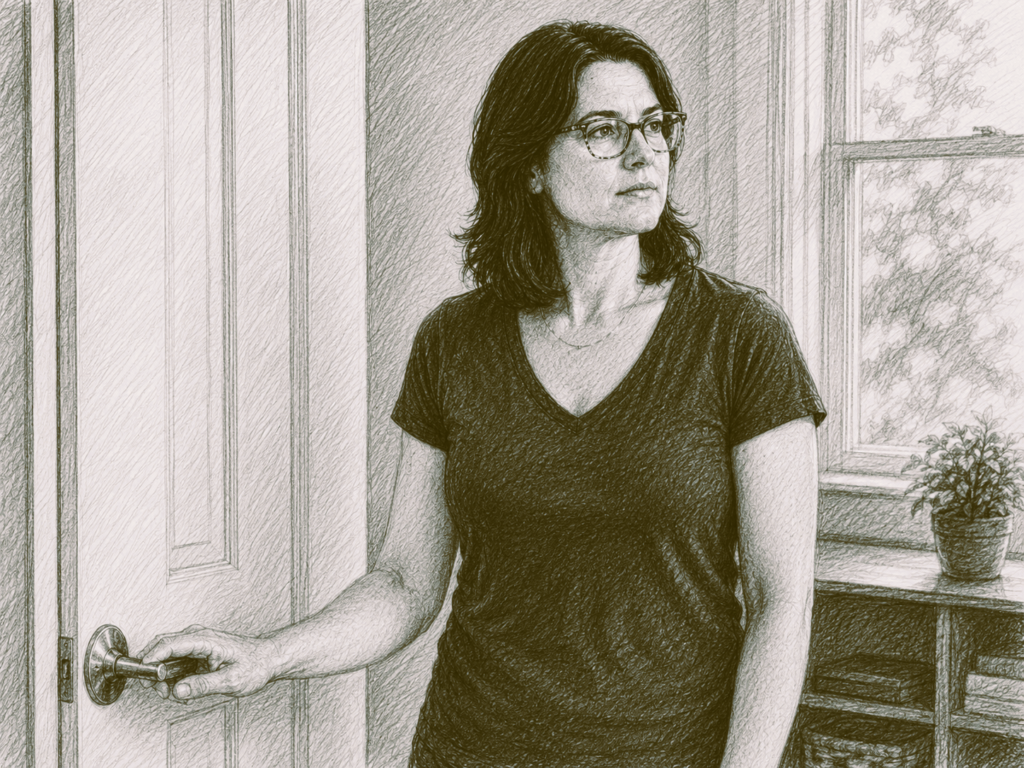
Emotional Concussion as an Unrecognized Limit


Some experiences are recognized only after behavior changes. The first indications appear as small, sensible adjustments made to keep daily demands manageable. Schedules are altered. Routes are simplified. Time and energy are handled more deliberately.

Paul began leaving earlier than necessary so the platform would be quieter. He waited in areas where people did not tend to gather and stood far enough from the edge to avoid being jostled.

The change felt practical and reasonable. Conversation began to take more concentration than before. Paul found himself rechecking what had just been said and pausing before responding, careful not to lose track of the exchange. Background sound no longer faded on its own. Familiar tasks took longer because each step required attention. None of this felt alarming. It felt like something that needed to be handled.

Paul began spacing appointments farther apart so there would be time to recover between them. He took the same routes each day to avoid additional decisions. He limited how many conversations he would have in a row and ended them earlier than he used to. Invitations were not declined outright, but they were answered more selectively so they remained manageable. This was not withdrawal. It was a method of staying functional.

This is the pattern that precedes an emotional concussion.

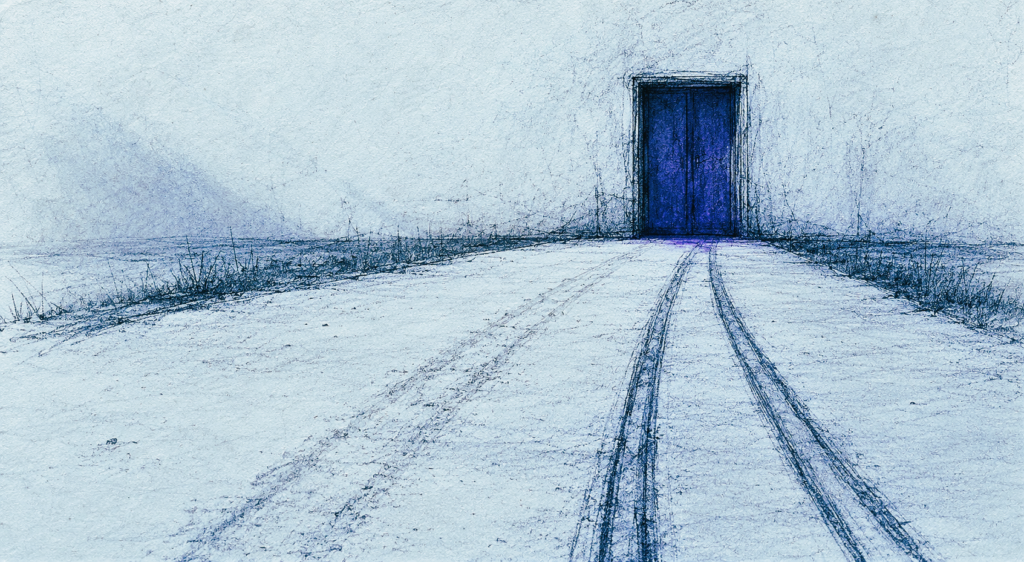
Paul stood on the train platform with a ticket already purchased and a destination he had planned for. The timing, the route, and the reason for going were familiar. When the doors opened, however, his body did not respond. The pause was not indecision or fear. It was the result of strain that had been building for some time—attention held too long, responsibility carried without pause, the same careful planning and self-monitoring repeated day after day.

When the doors opened, his body did not move. The train left without him. What mattered was not the missed ride, but what the moment revealed.

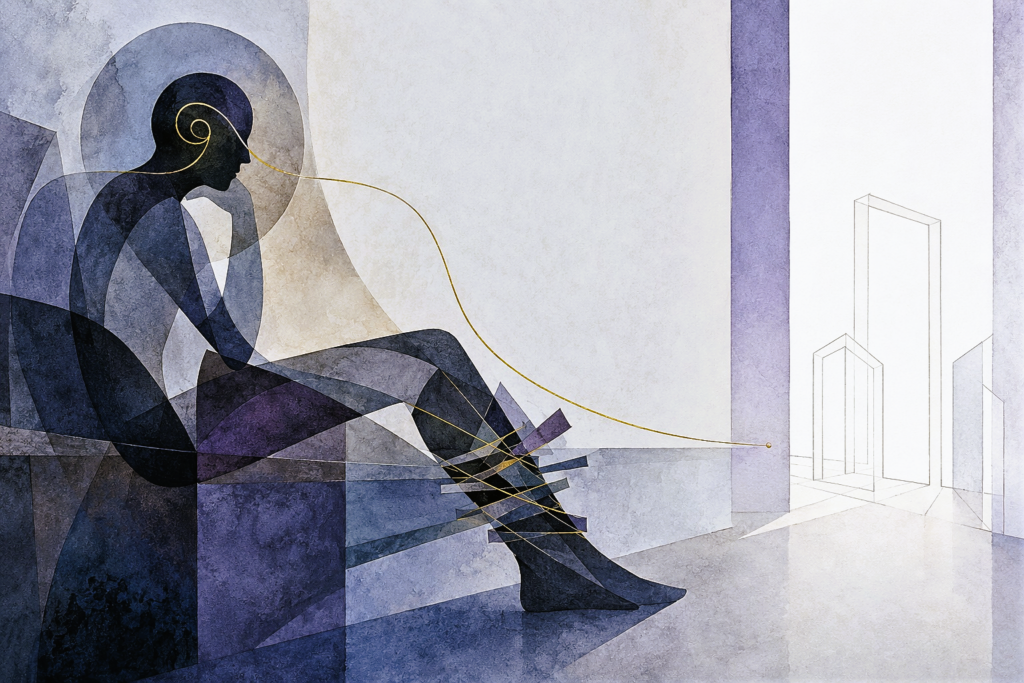
An emotional concussion is what happens when regulation and responsiveness are sustained through effort for longer than they can reliably be maintained. Familiar actions remain possible, but access to them becomes inconsistent, especially under continued or closely spaced demands. What had been happening to Paul did not register as a problem; it unfolded quietly, masked by planning, competence, and sustained effort.

Unlike a concussion resulting from traumatic brain injury, an emotional concussion does not involve a physical impact to the brain. It describes a functional disruption in emotional regulation and responsiveness that develops under sustained demand without adequate recovery.

Over time, Paul’s capacity to manage emotional input, ongoing demand, and recovery had become less available. What had changed was not his commitment or competence, but the reliability of his responses under sustained demand—days structured without pause, conversations stacked back to back, and expectations that continued without intervals long enough for his attention and responsiveness to return to a workable level.

Regulation, in this context, is the everyday ability to notice emotional signals and respond without having to consciously monitor or adjust the response as it happens. It is what once allowed Paul to follow a conversation without rechecking each sentence, to stand on a platform without scanning for exits, and to handle routine responsibilities without constant self-monitoring.

Psychological research describes emotion regulation as the processes people use to shape emotional responses as they arise, particularly under stress or prolonged demand (Gross, 1998). When those processes are stretched beyond capacity, responses may slow, flatten, or arrive with unexpected intensity, even in familiar situations.

This helps explain why Paul could function as expected in some situations while quietly struggling to complete tasks he had handled for years. Regulation was still happening, but it now required deliberate effort. Tasks that had once felt automatic now demanded his full attention, consuming the time and energy that had previously made ordinary responsibilities manageable.

Research on stress shows that when emotional demand stays high over time, it becomes harder to concentrate, keep track of information, and make decisions, even when effort and motivation have not changed (Arnsten, 2009). Like a physical concussion, an emotional concussion affects both processing and regulation. Unlike conditions that follow a single, identifiable event, it often develops through repeated exposure to demand without adequate recovery. For Paul, there was no moment he could point to as the beginning. There was only a growing mismatch between what was required of him and what he could reliably support.

Research on cumulative stress shows that repeated activation of stress responses gradually alters how the brain and body regulate themselves over time (McEwen, 1998). As regulation became less automatic, Paul’s attention grew less reliable. He noticed himself losing track of conversations if more than one person spoke. He found it harder to follow through when tasks came with interruptions.

Emotional responses lagged behind events or surfaced later, when there was finally space to feel them. Emotional processing, in this context, refers to how experiences are taken in and made sense of rather than reacted to right away. Studies of stress and emotional processing suggest that when pressure is continuous, emotional reactions may arrive later, feel blunted, or surface out of context rather than disappearing altogether (Pessoa, 2009).

Sensory input, meaning ordinary sounds, movement, and social presence, also began to demand more from him. Background noise stopped fading away. Nearby movement interrupted his focus. Situations that once registered as neutral now required deliberate filtering. It took more work to stay focused on what he was doing.

Energy was being spent staying focused and keeping up with everything he was expected to do. Rest did not always help, because there were rarely moments when he could stop and let himself catch up. When that time never came, fatigue could linger even without physical exertion (McEwen, 1998). This fluctuation is one reason emotional concussions are often misunderstood.

Paul could function well in controlled settings and struggle in others. From the outside, that inconsistency could look like mood or motivation. From the inside, it felt like negotiating access to his own capacity.

Within a disability framework, what matters is impact. When access to work, relationships, communication, or public space becomes unreliable, disability is present, even if the duration is uncertain. Episodic and temporary limitations still shape participation. They still require adjustment.

For Paul, pressure took the form of situations that did not resolve and expectations that continued without pause. Responsibilities accumulated even when he had little control over how or when they were carried out. No single demand felt unmanageable in isolation. What became difficult was how closely they were spaced.

What often goes unrecognized is how the body adapts.

Paul’s nervous system is responding to the constant demands placed on him. Everyday sights, sounds, and expectations begin to take more of his attention, and small pauses appear as he instinctively steps back.

Signals that had been ignored start showing up in different ways. To others, this might look like withdrawal or resistance. To Paul, it feels like stepping back because continuing as before is no longer possible. These shifts are protective, helping him manage strain that has built up over time (Porges, 2011).

Recovery from an emotional concussion does not begin by pushing harder. It starts by reducing what is expected, simplifying tasks, and allowing space to regain control. Progress may be uneven, and stability often arrives before confidence, as the ability to handle one thing at a time is restored.

Regulation becomes more reliable only when those demands change. Paul’s missed train did not mark a turning point. It marked a limit. What he had been managing through planning and sustained effort could no longer be relied on in the same way. The difficulty was not with intention or preparation, but with access in that moment.

An emotional concussion is recognized when familiar actions fail to initiate despite readiness and intent. For Paul, the pause on the platform was enough to make that clear. Paul arrived on the platform prepared. He had done what he had learned to do over time: plan carefully, reduce variables, and manage his attention so he could follow through. The effort required to sustain that level of functioning had been increasing quietly, concealed by his continued competence. The pause on the platform revealed what the preceding months had been building toward.

It reflected the core features of an emotional concussion: regulation that no longer operates automatically, responses that require deliberate effort, and limits that surface only after long periods of adaptation. His experience shows how easily this condition can remain unrecognized when someone continues to meet expectations.

The essential question this leaves for anyone trying to understand how strain accumulates is not whether pressure exists, but whether we know how to notice when effort has replaced ease—before access becomes uncertain.


References

Arnsten, A. F. T. (2009). Stress signalling pathways that impair prefrontal cortex structure and function. Nature Reviews Neuroscience, 10(6), 410–422. https://doi.org/10.1038/nrn2648

Gross, J. J. (1998). The emerging field of emotion regulation: An integrative review. Review of General Psychology, 2(3), 271–299. https://doi.org/10.1037/1089-2680.2.3.271

McEwen, B. S. (1998). Protective and damaging effects of stress mediators. New England Journal of Medicine, 338(3), 171–179. https://doi.org/10.1056/NEJM199801153380307

Pessoa, L. (2009). How do emotion and motivation direct executive control? Trends in Cognitive Sciences, 13(4), 160–166. https://doi.org/10.1016/j.tics.2009.01.006

Porges, S. W. (2011). The polyvagal theory: Neurophysiological foundations of emotions, attachment, communication, and self-regulation. New York, NY: W. W. Norton & Company.


The Wheelchair in the Line


The security line advances beneath fluorescent lights. Everything is arranged for flow. People move forward, belongings slide along belts, and decisions are made quickly to keep the system in motion.

I sit in an airport-issued wheelchair, my walking poles resting across my lap. When it is my turn, I place them on the belt. A TSA officer releases the clamps and the sections collapse. The careful adjustments I rely on are dismantled in seconds. No one asks. They are treated like luggage, even though I depend on them to move.

A card clipped to my boarding pass reads Disability Mobility Assistance. It signals that I qualify for support, but it gives no indication of what that support will involve or how it will be delivered.

A TSA officer approaches and the screening begins. I remain seated. The script comes quickly. “I will be using the backs of my hands. Let me know if anything is uncomfortable.” The pat-down happens in the chair. No one asks whether I am able to stand. The process proceeds as if the next step has already been decided.

I know the guidelines allow for flexibility when mobility devices are involved. Officers are expected to explain each step, confirm before proceeding, and respond to the individual in front of them. What often happens instead is efficiency without inquiry.

Once cleared, my poles are returned in pieces. I reassemble them, resetting each section to the height that keeps me steady. People move past with rolling bags as the line continues forward.

Beyond security, the airport opens into wide corridors. Movement is continuous. Seating appears in short intervals. The space is arranged for speed. The design assumes uninterrupted motion, leaving little room for those who move differently or require time.

My boarding pass grants me preboarding. At the gate, I present my card.

“Preboard,” the agent says, gesturing me forward.

I am guided down the jet bridge in the wheelchair I arranged for in advance. The aircraft grows louder. At the aircraft door, another wheelchair is already waiting.

“Wheelchair,” a crew member says, pointing to it.

I stand and get out of the chair.

The crew member exhales.

“There’s another wheelchair coming from Gate E,” she says to no one in particular. Her hand gestures toward the waiting chair anyway.

Ahead of me, a woman waits in an aisle chair, a narrow mobility device used to transport passengers who cannot walk down the airplane aisle. The chair is pushed by airline staff. Straps secure the passenger’s torso and legs, restricting movement, and once the process begins, stopping or adjusting requires staff to intervene.

I watch as the crew speaks to one another rather than to her. Irritation threads through their voices. Someone says the wheelchair was not in the system. Someone else says it should have been requested ahead of time. The aisle chair jolts as it crosses onto the aircraft threshold. No one slows. No one checks on her.

At the aircraft door, movement stops. The aisle is crowded. Bags are shifted overhead. The aisle chair cannot move forward. The woman remains where she is. I remain behind her. No one addresses either of us.

When the aisle clears, the chair begins to move again. It scrapes against a seat frame, prompting the woman to flinch. Someone murmurs an apology as the chair keeps moving forward. I watch the tight space and how her body has no room to shift or adapt. The moment feels familiar. I have been in that chair before.

On a previous flight, I was the passenger assigned to the aisle chair. I walk with the aid of walking poles and made it clear that I did not need the chair. I said so plainly. Still, the chair was brought. I sat in it because I was told to. My poles were taken from me, and then the chair began to move.

At first, the aisle was wide enough to pass through. Then it narrowed. The chair began to hit seat frames, and my knees knocked against armrests. I could not shift my position or control the pace. I said it was not working. I said I was not safe. I said I was going to be hurt. The chair continued forward. The staff stopped only when I raised my voice, not a shout, just enough to interrupt the sequence they were following.

The chair stopped. Standing was not an option. A belt restrained my chest. Another held my legs in place. I remained as positioned until someone reached in and released the straps. Only then was movement permitted.

In both moments, the issue is not the chair itself, but the way decisions are made around it. In one instance, a woman is transported without being acknowledged. In the other, I am directed to a device despite having clearly said I did not need it, and my mobility aids are taken away. In each case, speed takes precedence over conversation, and assumption replaces recognition.

The same pattern surfaces again later in the flight, when a flight attendant places a cup of water on my tray and guides my hand to the glass. She tells me she wants to show me where it is. My disability is not visual. I do not correct her. This follows the same logic. Assistance is offered based on assumption rather than observation or inquiry. The moment passes, but the mindset behind it remains.

These moments do not stem from a single error or a poorly trained individual. They arise through repetition, through systems designed to prioritize completion over comprehension. The rules describe a process with defined steps, assigned roles, and prescribed forms of assistance.

Once set in motion, those routines reinforce themselves. Speed is rewarded, pauses are discouraged, and attention shifts away from the person experiencing the process.

The sequence often unfolds before there is time to speak. Decisions are made in advance and carried forward by habit rather than awareness. Assistance becomes something done to someone rather than with them. The system continues forward even when the individual within it has not been fully seen.

Airports are designed to move people efficiently from one place to another. Efficiency, however, is not the same as attentiveness, and movement is not the same as access. When systems rely on assumption rather than inquiry, they can operate missing the needs of the people they intend to support.

The question is not whether these processes function as designed, but whether there is room within them to slow down, notice, and truly recognize the people moving through them.


Brick without Cover

A house can be quiet without feeling peaceful. Chairs remain exactly where they were last placed. Doors close completely. Nothing seems out of place.

Brick without Cover begins with nothing visibly amiss. Joy arrives in restrained gestures. Some things are said aloud, while others remain suspended, understood without ever being voiced.

Eventually, there may be another space, one less meticulous about what is allowed to be seen. Moving between these environments reshapes how a person learns to inhabit them, holding on to what was once necessary while discovering what is now possible. This reflection comes out of that movement, shaped by what is kept intact and what is no longer concealed.


Brick without Cover

(a poem)

By Kerry Ann Wiley

Black and white—
the childhood house remains still,
windows hushed behind shuttered eyes,
light trimmed into obedient squares
that learned early
how to vanish without disruption.

There was joy there,
of a kind—
tidied, timed,
set beside necessary fictions:
we are fine,
this is how it’s done,
look away.

The house was built to contain.
Its walls received sound without echo,
held shape around each omission.

Now—another house,
washed in half-light and bone-colored truth.
Brick without cover.
Trees gather nearby,
not to shield, but to witness—
their rings not a measure of time,
but of what was finally allowed.

This house forgets to lock its doors.
Light comes in uninvited.
The shadows still attend,
given names,
offered chairs.

Not one house,
but a shape held between them—
unfinished,
part shadow,
part light left on too long.
Neither whole alone,
but together, a kind of home.


What remains is not a single place, but the space that opens between what was once held back and what can now come through.

What came first does not disappear, nor does what followed take its place. Each leaves its trace. The poem ends by holding both at once, allowing what was shaped by restraint to exist alongside what no longer needs to be hidden.


The Light They Left


Time does not move evenly. Some years leave only a trace, while others settle into the objects that are handled again and again. Holiday decorations are among them, brought out, arranged, lived with, then taken down and packed away, growing more delicate and more marked by time.


The Light They Left
By Kerry A. Wiley

The Christmas lights are hung again,
their glow softer than it once was—
each strand a little more fragile
after a year, and then more years.

Faces once gathered here now live in memory.
A voice seems to rise with the lights,
a trace of laughter moving with the glow
as it settles across the branches.

Red and gold ornaments sway gently,
glitter catching the faintest shine.
Pieces once handled by a child’s small hands
now rest in an adult’s hold,
carrying the years between.

And the familiar Happy… Greetings…
rise toward the lights
and meet the tears the season has earned.

Still the tree stands in its softened glow,
each fragile strand holding what time cannot—
the touch of those who shaped these seasons,
and the light they left behind.


In the rituals of the season, certain objects hold more than their shine. A strand of lights, an ornament shaped by years, a greeting spoken with both joy and ache: these small details reveal the passage of time and the absence of those who once stood beside us. This poem reflects on that lingering light and the memories it carries.


Rethinking Independence


Most days begin around seven. The extra time is necessary for putting on shoes, having coffee, and settling into the morning at a pace that feels workable. That time has become a reliable gauge. It isn’t effortless, but it reveals what has to be in place for the day to begin in a workable way.

There are mornings when that balance slips—a shoe takes longer than it should, a reminder comes too late, or the pace is off before anything has begun. Those moments clarify why small structures matter and how easily the day can shift without them.

Independence grows from practical choices and deliberate adjustments. It shows up in the way tasks are approached, how spaces are arranged, and how decisions are made. Four elements have consistently emerged as the backbone of that process: capability, adaptation, self determination, and stability. They build gradually, shaped by experience and the realities at hand.

Capability often becomes noticeable in the small things. Phone reminders come at the right moment, providing timely cues. A quick mental run through of the day helps sort out what needs attention before heading out the door. Keys and chargers are kept in predictable places so they can be easily found.

Being assertive about what is manageable, such as turning down an added task or stepping away from a conversation that has gone on too long, becomes an essential practice. Boundaries that define limits in a straightforward way make space for priorities that have to be handled. Routines that make leaving the house smoother and help finish the day without added difficulty provide needed structure. Each step adds a bit of order and makes the day easier to handle.

Adaptation becomes clear in the adjustments made to reduce strain, like shifting a chair, softening the lighting, or keeping the TV volume low so the space feels easier to manage. Lighting is adjusted so it is neither too harsh nor too dim, which reduces strain and makes it easier to move through tasks. Noise is controlled so it does not compete with whatever needs to be done. Items like chargers, scissors, and supplies that tend to get used often are kept in specific spots so they can be picked up quickly instead of being searched for each time.

Steps that require repeating, such as bending, reaching, or backtracking across a room, are reduced by setting things up in the most direct way possible. The point is to make tasks smoother rather than harder. Adaptation changes the environment so the person can move through it with less resistance.

Self-determination becomes visible in the choices that determine where time and effort actually go. Limits are set around commitments to avoid exhaustion. Workspaces or social environments are chosen when they feel respectful and manageable. It becomes important to know when to keep things as they are and when to try a different approach.

Health or mobility approaches are chosen based on what feels manageable and what the body can handle, and they are selected based on what actually works because the alternatives do not. These decisions influence what gets done and how it gets done, and they decide what happens next.

Stability comes from having reliable backups in place. A second pair of shoes stays by the door in case one cannot be put on. Chargers are kept in more than one room so running out of power does not cause unnecessary complications. A spare key is stored where it can be reached without searching. These small safeguards prevent minor issues from turning into major delays. Stability grows from knowing that if something goes wrong, there is a simple fix that allows things to continue in a workable manner.

If independence is built through capability, adaptation, self-determination, and stability, then teaching it means making those elements observable and repeatable. It isn’t something delivered in a single moment, but something modeled over time. That might involve demonstrating how to set up a space to reduce effort, plan for delays without panic, or say no without guilt. These skills are learned through example, by creating room to experiment, adjust, fail without judgment, and try again in a way that fits the person, not just the task.

What teaches independence best is consistency: the reinforcement of decisions that make life more manageable. It is passed on not by instruction alone, but by making room for others to see how small, workable choices accumulate into a reliable foundation. Over time, those choices become habits, and those habits become a structure.

Teaching independence starts with understanding how someone makes their routine work. It means noticing the choices that conserve effort, the small adjustments that prevent disruption, and the reasoning that keeps tasks manageable. When these patterns are acknowledged and supported, they become easier to explain, repeat, and reinforce.

Independence grows through insight and repetition—by understanding what makes daily routines more workable, and by practicing what works until it sticks. Over time, it becomes more than a personal achievement; it becomes a shared process others can recognize, support, and help sustain.

If independence is something that can be taught, then it is also something that can be rethought. Each person’s pillars will look different, and they will shift. The real question is not whether someone can be independent, but what conditions allow their independence to take shape. It takes shape through repeated actions—responding to what’s necessary, refining what isn’t working, and holding onto what is.

Independence comes from design—the right supports, the right adjustments, and a setup that allows things to function without constant disruption. That’s what makes it hold. What lasts isn’t built by force. It’s built by fit.


After She Sat Down


Sometimes an ordinary task is interrupted in an instant: a part breaks, a movement misfires, or support that was reliable a moment ago suddenly isn’t. When that happens, the situation strips down to what’s practical—what needs fixing, what can be done now, and who notices.

One evening at practice, Amy faced exactly that kind of interruption. What followed was straightforward: a problem became visible, and someone nearby addressed it with competence, without turning it into anything more than it needed to be.


The strap slipped from Amy’s fingers as the Velcro finally separated from its fabric backing. The failure hadn’t come suddenly; the stitching had been weakening for weeks—first with a few loose threads, then a corner beginning to lift. That night, as she tried to stand, the last of the stitches gave way. The strap peeled free, and her ankle tilted outward just enough to throw her off balance. She caught herself and eased back onto the bench, her eyes following the limp strip as it dropped to the floor.

The adaptive sports group had wrapped up for the evening. Most people were already heading out, pulling on jackets and saying their goodbyes. Amy stayed behind, wanting to fix the brace before she left. She leaned forward to retrieve the strip, but a sharp pull through her hip brought her up short. Shifting her weight did nothing to ease it. Her fingertips hovered just above the floor, the strip still out of reach.

Across the gym, Ryan paused while rounding up basketballs. He knew Amy from her regular sessions and had seen her stand from that bench many times. This time looked different. He watched her steady herself when the brace gave way.

He noticed the loose strip, its edge frayed and unraveling, with fine threads curling outward in loose spirals. The damage was unmistakable—it had been coming apart for some time. One look told him it wouldn’t bear any weight until it was properly repaired. He walked over without hesitation.

He picked up the strip and said in a level, practical tone, “This came off completely. I can fix it.”

From the equipment closet he retrieved scissors, a new length of Velcro, and a roll of strong fabric tape. Kneeling beside her, he removed the remaining threads, measured a new strip, cut it cleanly, and pressed the adhesive-backed piece into place. He reinforced it with fabric tape, smoothing it until it lay secure.

“Try it now,” he said.

Amy folded the strap across her ankle. The new Velcro caught immediately. She stood slowly, tested her weight, and felt the brace support her again.

“Thank you. This holds exactly how it should,” she said.

He nodded with an easy warmth. “Of course. Take care getting home. See you Wednesday.” Then he returned to gathering the basketballs.

Amy gathered her things and headed for the door. Ryan’s help had been exactly what the moment called for, offered quietly and without hesitation or commentary. It remained just that—a simple response to a straightforward need, without becoming anything more.

Living with a disability often requires constant adaptation. Equipment breaks down, patterns of movement shift, and even routine tasks—like adjusting a brace—can suddenly become more layered. Something that had been manageable alone just moments before can quickly require a different response. In these instances, help from another person can make a quiet but meaningful difference, especially when it is offered with accuracy and restraint, responding precisely to what is needed without overtaking the situation.

It may seem like a passing moment to an outside observer, but for the person experiencing it, the impact is real. Support that fits the moment helps maintain continuity—reducing friction without drawing attention or turning the task into something larger than it needs to be, or into a spectacle. Ryan saw what had happened, recognized what was needed, and responded in a way that matched Amy’s need and yet respected her control of the situation.

That kind of attentiveness stays with a person. And it quietly raises the question: why is such a natural awareness of need—offered without calling attention to difference—still so uncommon?


In Honor of Alice Wong

Last week, Alice Wong, a leading advocate for disability rights and inclusion, died. As the founder of the Disability Visibility Project, she reshaped national conversations about access and equity, leaving a lasting impact on how many—including myself—understand disability and justice. Although I never met her, her work made a personal impact on me and on many others who learned from her determination and example.

Her national work began in 2013 when she was appointed to the National Council on Disability. From that point forward she became a consistent presence in conversations about public policy. She emphasized that access is a fundamental requirement for participation and that people with disabilities deserve to be included from the start, not added later.

Alice used writing, organizing, and community building to create space for people with disabilities to share their own experiences. The Disability Visibility Project became a central part of that effort. Through this work she encouraged public officials to address disability policy directly and she reminded the broader public that everyday choices, including the design of common items, can either expand or restrict independence. She also advocated for equitable vaccine access during the early stages of COVID, drawing attention to the needs of people at highest risk.

In 2024 she received a MacArthur Fellowship in recognition of her contributions. The acknowledgment reflected the reach of her work and the depth of her commitment to advancing disability rights.

Alice grew up in Indianapolis as the daughter of parents who had immigrated from Hong Kong. She lived with a form of muscular atrophy that gradually limited her mobility and strength. She often spoke about how early experiences with discrimination shaped her understanding of justice and informed her future advocacy.

She studied sociology, completed graduate work at UC San Francisco, and spent part of her career supporting individuals who wanted to live independently. Her writing later explained how policy decisions affect people with disabilities. She addressed the realities of Medicaid, long term care, and the constant effort required to secure reliable support. Her work helped many people understand how the structure of public programs shapes daily life.

When the political environment changed in 2024 she expressed concern about potential threats to public health programs. She understood that these systems play a central role in allowing people with disabilities to remain in their homes, maintain autonomy, and participate fully in their communities.

Alice Wong will be remembered as an advocate, a writer, and a leader who helped this country see disability more clearly. She honored the experiences of people with disabilities by insisting that they be included, respected, and heard. Her work leaves a strong foundation for those who will continue the effort to build environments where access is standard, inclusion is intentional, and every person has the opportunity to participate fully.

May her memory continue to inform that work.


Still—We Knock

Some moments are personal. Others belong to something larger—a shared struggle, a long effort carried quietly by many. This poem honors those whose work often goes unseen, yet whose presence shapes what continues. It is not about a single event or voice, but about those who remain, who persevere, who keep pushing against doors that resist opening.


Still—We Knock

By Kerry Ann Wiley

Black fabric—
not for mourning,
but to be seen.
Worn when
the moment
demands witness.
Still—we knock.

A name was spoken,
yet the moment
stretched beyond it.
As the words quieted,
the room shifted—
not toward applause,
but toward recognition
that more had entered
than one voice alone.

It was history carried,
effort layered,
work done quietly
over time.
Still—we knock.

Some lead
by stepping back.
Some shape
what endures.
Change builds
in places
rarely visible.

One open door
is never enough.
Behind each threshold
waits another—
sometimes locked,
sometimes guarded
by silence or custom.
Still—we knock.

The path is made
not by those
who walk first,
but by those
who keep walking,
even when
the way ahead
is uncertain.

Footsteps sharpen,
shoulders rise,
a pulse gathers
from everything
once held back.
Still—we knock.

Forward becomes fire—
not blazing,
but steady,
certain,
undaunted—
a truth refusing
to recede.

Something long-muted
flares awake—
hard, bright.

What rises now
won’t vanish.
It holds its ground,
quiet and unshakeable,
the kind of truth
that alters
what follows.
Still—we knock.


“Still we knock” is more than a line; it captures the persistence of generations who refused to step aside. It echoes the resolve of those who kept moving forward without applause, trusting that their effort, whether witnessed or not, propelled the cause beyond the limits of any single moment.

It speaks to labor that is routinely overlooked: the work that happens offstage, outside the spotlight, behind the moments history later declares decisive. This is the force that shifts what once seemed fixed.

There is no final knock that concludes the struggle, only the steady rise of voices pushing back against silence and resistance. The poem gives shape to a presence that refuses to disappear.

The door stands heavy with the imprint of what it once denied. Yet, still—we knock, because the work remains unfinished. Even as progress takes form, what remains undone reminds us of the distance still ahead.

The poem ends, but the motion continues: a quiet insistence, a shared resolve, a history not merely remembered but continuously shaped. It leaves the moment open, urging us to stay present with its call. In the spaces where names go unspoken and effort goes unseen, a force moves forward—quiet, steady, and still demanding to be heard.

Walking the Path of Advocacy: The Power of “We”

I sat at a table in a dressy black dress, the kind you wear when the evening calls for something more formal. We had just finished a meal, and the room had settled into that familiar quiet that follows shared conversation. Then the microphone was tapped, a small signal that the program was shifting, and the introduction to the award began.

I listened as my name was read, followed by a biography, a list of projects, and the work that had shaped my path. Then came the words “Advocate of the Year.” Hearing it was a shock—almost surreal—because the room was filled with people I admire: mentors, advocates, and colleagues whose example has guided me.

Seated at my table were the faces of those who have stood by me from the start—family, friends, and coworkers who have guided, supported, and mentored me throughout. And in that moment, I also felt the presence of those no longer here—those who paved the way, offered their encouragement, and shaped the values that continue to carry me forward.

The recognition was—and remains—a personal honor, but the significance extended far beyond me. It was a reflection of their contributions, support, and shared commitment. The recognition acknowledged that the work, the time, and the steady effort to help had been seen. I was deeply grateful for the moment and humbled by what it represented. It affirmed why the work matters—and why it must continue.

It is one thing to do the work because it feels necessary. It is another to realize that others have noticed not only the outcomes, but the steady focus the work required. They saw the hope behind that effort, the belief that it could lead to positive change, and the willingness to speak up when silence might have been easier. That acknowledgment carried weight. It reminded me that advocacy is not something done alone. It is shaped by every conversation, every challenge, and every person who shows up beside you.

The word advocacy may seem straightforward at first, but its depth becomes clearer when you consider what it truly involves: the ongoing effort, responsibility, and collaboration required to bring about meaningful change. At its core, advocacy is the act of seeing a gap or a harm or a need and refusing to look away.

It means stepping forward when something is not right and taking action that leads to meaningful, practical change. It grows out of intention and steady effort, not the hope of standing out. I am grateful for the honor I received, yet the work itself has always mattered most.

Self advocacy works alongside it, grounded in recognizing needs, asserting rights, and protecting wellbeing. Both matter. The advocacy that makes a difference shows up in our treatment of others, in the trust we form, and in how we respond when challenges deepen.

Effective advocates do not lead with ego. They lead with humility, aware that lasting change is built through collective effort. They listen before they speak. They learn from the people most affected. They speak up when something is wrong. They acknowledge when a problem exists and move to change it. And they also help contribute to whatever solution begins to take shape. Their focus stays on the benefit to others, not the credit they might receive.

There are traits that weaken advocacy as well. Some voices dominate rather than lift. Some chase visibility rather than progress. Some point to problems loudly yet avoid the slow, necessary work of repair. Advocacy shaped this way can do harm even when the words sound right.

This work has never been about personal recognition. From the beginning, it has been guided by a commitment to creating more inclusive schools, workplaces, and communities. My voice is just one among many, and as I accepted the award that carried my name, I was keenly aware of the countless others whose voices and efforts were present in that moment. They have shaped my thinking, supported my development, and helped make the path forward more accessible.

This work has never been mine alone. It has always been about those who come next—many of whom I will never know. My intention, both then and now, is that these efforts contribute to removing some of the barriers faced by people with disabilities and support the ongoing work of creating environments where disability neither limits potential nor determines outcomes. The goal has always been to contribute to meaningful progress—with purpose, with integrity, and with optimism.

My understanding of advocacy has always been grounded in a commitment to broader inclusion. Challenges rarely arise in isolation. If I encounter a barrier, others like Joe, Stephanie, and many more are likely confronting it as well. That is the essence of the collective “we,” the understanding that individual challenges often reflect shared experiences and call for responses that consider many, not just one. The goal is not to resolve an issue for a single person, but to change the conditions so that many can benefit.

The collective “we” calls us to look beyond the immediate and consider the ripple effects of our actions. Who else is living this? Whose experience mirrors mine? These questions invite us to expand our view and recognize the shared nature of struggle, hope and change. Reshaping the environment means creating conditions where more people feel a true sense of belonging and possibility. It means ensuring they are included, supported and understood, with the space to participate fully and to be recognized for their strengths.

Receiving the award was meaningful, yet it was not a finish line. It served as a reminder that advocacy is a practice—daily, deliberate, and grounded in the belief that change is possible. Titles do not define the work. Our choices do. The quiet moments when we name what is wrong and push for what is right are the moments that build the path ahead.

Advocacy begins with recognizing when something is not right, understanding how it affects others, and helping move solutions into place that extend beyond individual circumstances. The work ahead asks for continued dedication to the collective “we,” widening the path so that schools, workplaces, and communities become places where inclusion is not conditional or selective, but the standard that guides how people are welcomed and supported.

It is the ongoing effort to create a future where the expectation is inclusion, where opportunities are shaped by belonging rather than separation, where possibility replaces limitation, and where multiple ways forward are welcomed as part of how true inclusion takes shape.

My thanks to the nominators, the selection committee, and all who have supported and informed my work along the way. This recognition reflects the collective effort at the heart of advocacy, and it strengthens my commitment to continue working toward broader inclusion in our schools, workplaces, and communities. Advocacy is never the work of one alone—it is the strength of many, moving forward with purpose toward positive change.

—Kerry Wiley

Making Participation the Rule

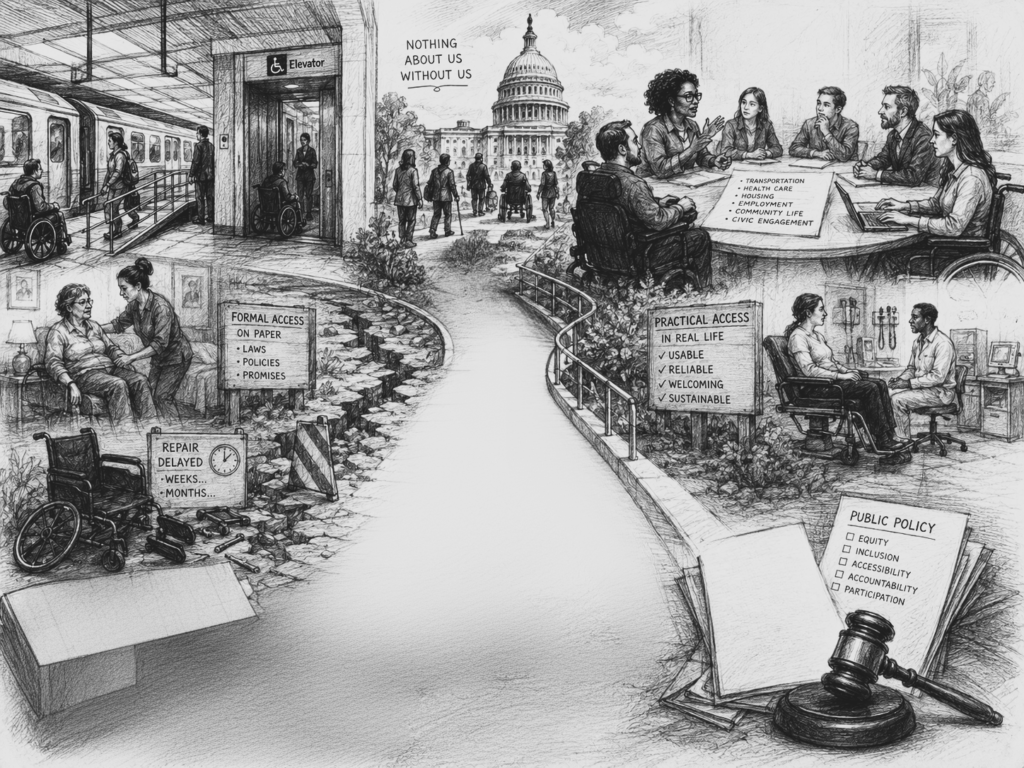
Inclusion begins with design. It grows from choices that shape systems, define spaces, and determine whose experiences are valued. Advocacy is the practice of noticing where exclusion exists and taking deliberate action to replace it with equity and access.

Equity means structuring environments so that everyone has the support and opportunity needed to participate fully. Access means removing physical, social, and procedural barriers so that participation is not conditional or selective, but available to all. True inclusion is where participation is assumed, not granted.

Wiley’s Walk began as a way to question how belonging is defined in systems that decide, often unintentionally, who gets to participate. It also grew from an effort to understand belonging in places where participation too often depends on invitation rather than expectation. Over time, it became a way to examine how decisions in policy, education, and design shape inclusion and how systems can evolve to welcome broader participation by intention rather than exception.

An early reflection once suggested, “If there’s a mountain in your path, climb it, go around it, or go through it — there’s always a way.” That belief has since evolved. The question is no longer how to move past barriers through effort alone, but why those barriers exist in the first place.

True inclusion depends on shared responsibility between individuals and systems, where design and intention work together to make participation real. Possibility is born from design that considers everyone from the beginning. When accessibility and belonging are integral, participation is no longer an exception to the rule but the rule itself. Possibility depends less on individual resilience and more on how systems are built. When accessibility and belonging exist within the structure, participation becomes the standard measure of good design.

Advocacy develops through relationships built on active listening, genuine collaboration, and shared responsibility—a collective commitment in which all participants contribute to and are accountable for a common goal. This approach acknowledges that no single voice or effort is sufficient on its own, reinforcing the need for coordinated and reciprocal engagement. Its strength lies not in volume or visibility, but in the inclusive process of ensuring that a broader range of voices meaningfully contribute to commonly held spaces.

Change emerges through small, consistent actions. It can begin with a conversation that challenges assumptions about autonomy in classroom support, such as when a student with a disability outlines the specific strategies that support their learning, shifting the focus from compliance to collaboration. Another conversation might unfold in a design review, where someone questions why emergency procedures do not account for the needs of people with mobility impairments.

Design also plays a role in easing barriers—for example, when a theater introduces captioning and audio description as standard features rather than special requests, or when public parks incorporate quiet zones and sensory-friendly pathways that create more inclusive outdoor experiences.

Policy extends this work, redefining practice in meaningful ways. When school districts adopt inclusive curriculum guidelines shaped by people with disabilities, or when public libraries revise their programming frameworks to prioritize accessibility from planning through delivery, inclusion becomes not just encouraged but expected.

Policy matters most when it translates values into structure—when words on paper change how decisions are made, who is at the table, and whose needs are built into the outcome. Each of these actions moves inclusion from principle to practice, turning commitment into culture.

Advocacy is not a conclusion but an evolving practice that develops over time. Each step opens new dimensions of belonging, showing that inclusion must be cultivated continuously. This work calls for collective participation in creating communities where equity is the norm, not the exception.

The movement toward inclusion is fluid, shaped by awareness and intentional action. Real progress depends on what people choose to see and what they are willing to change. The question is no longer whether inclusion can happen, but how soon it will become a natural expression of a culture that no longer needs the word inclusion at all.