
There is a shift underway in how disability services are being defined at the federal level. It is not being presented as a reduction, but as a restructuring intended to streamline programs, consolidate funding, and return authority to the states. The framing suggests efficiency and responsiveness, yet it leaves a more direct question unresolved: what is actually being cut, and what continues to hold the system together?
Much of the current discussion focuses on what is being reduced or eliminated. That focus, however, misses the larger issue. The central question is not only what disappears on paper, but what functions begin to erode in practice.
Answering that requires moving beyond budget language and examining the structure itself. These are not isolated adjustments. They affect a system built over time to support participation in school, work, and community participation.
Several long-standing federal programs are proposed for elimination or restructuring. These include the University Centers for Excellence in Developmental Disabilities, the Developmental Disabilities Projects of National Significance, and programs that support voting access for individuals with disabilities.
At the same time, multiple programs under the Individuals with Disabilities Education Act would lose dedicated funding. These include preschool grants, personnel preparation, technical assistance, and parent information centers.
Funding for these efforts would instead be combined into broader grants distributed to states. Vocational rehabilitation programs, including supported employment services and protection and advocacy systems that safeguard legal rights, would also no longer receive separate, designated funding streams.
At first glance, this appears to be consolidation. There are fewer programs, fewer categories, and more flexibility. The stated logic is that reducing federal oversight allows states to allocate resources based on local needs. This approach assumes that decisions made closer to communities will produce more efficient and responsive outcomes.
That assumption only holds if the current system is made up of interchangeable parts. In reality, it is not.
Why These Programs Are Not Interchangeable
These programs form an interconnected framework that supports community inclusion and participation.
The University Centers for Excellence in Developmental Disabilities operate within universities across the country. They conduct research, train professionals, provide technical assistance, and work directly with individuals and families. In doing so, they connect research to practice and influence how schools, healthcare providers, and community programs deliver services.
The Developmental Disabilities Projects of National Significance serve as a testing ground for new approaches. These initiatives identify gaps in existing systems and develop solutions that can be expanded over time. They are often where innovation begins before it is integrated into broader systems.
Voting access programs focus on civic participation. They ensure that individuals with disabilities can engage in the electoral process through accessible polling places, adaptive technology, and support systems.
Within the Individuals with Disabilities Education Act, the targeted programs serve distinct and connected roles. Preschool grants support early intervention, which is widely recognized as critical for long-term outcomes. Personnel preparation programs train educators and specialists. Technical assistance helps schools implement effective practices. Parent information centers guide families through systems that are often complex and difficult to access.
Vocational rehabilitation programs extend this structure into adulthood. They support employment, independence, and the protection of legal rights in the workplace.
These programs provide support across the lifespan and make participation in community life possible in practical terms. They are not interchangeable.
What Happens When Funding Becomes Flexible
The proposed changes do not necessarily eliminate all services immediately, yet they alter the structure that sustains them. When funding is combined into broader grants, it is no longer tied to specific purposes. It becomes flexible, and that flexibility changes how decisions are made.
Flexibility allows states to respond to local conditions. At the same time, it changes the nature of commitment. When funding is no longer designated for particular programs, those programs become optional. States may continue certain services, but they are not required to do so. Decisions are shaped by competing priorities and limited resources.
This shift introduces variability into the system. Access to services may differ significantly from one state to another, depending on how resources are allocated. Over time, the system becomes less uniform and less predictable.
For individuals and families, that variability has direct consequences. It affects whether services are available, how long they take to access, and how effective they are once delivered. The differences may not be immediate, but they accumulate as priorities shift and capacity changes.
Programs that are less visible in the short term are often the most vulnerable in a flexible funding environment. Research, workforce development, and technical assistance do not always produce immediate outcomes. However, they are essential to long-term system capacity. Without them, the quality and availability of services begin to erode.
The Real Stakes for Community Inclusion
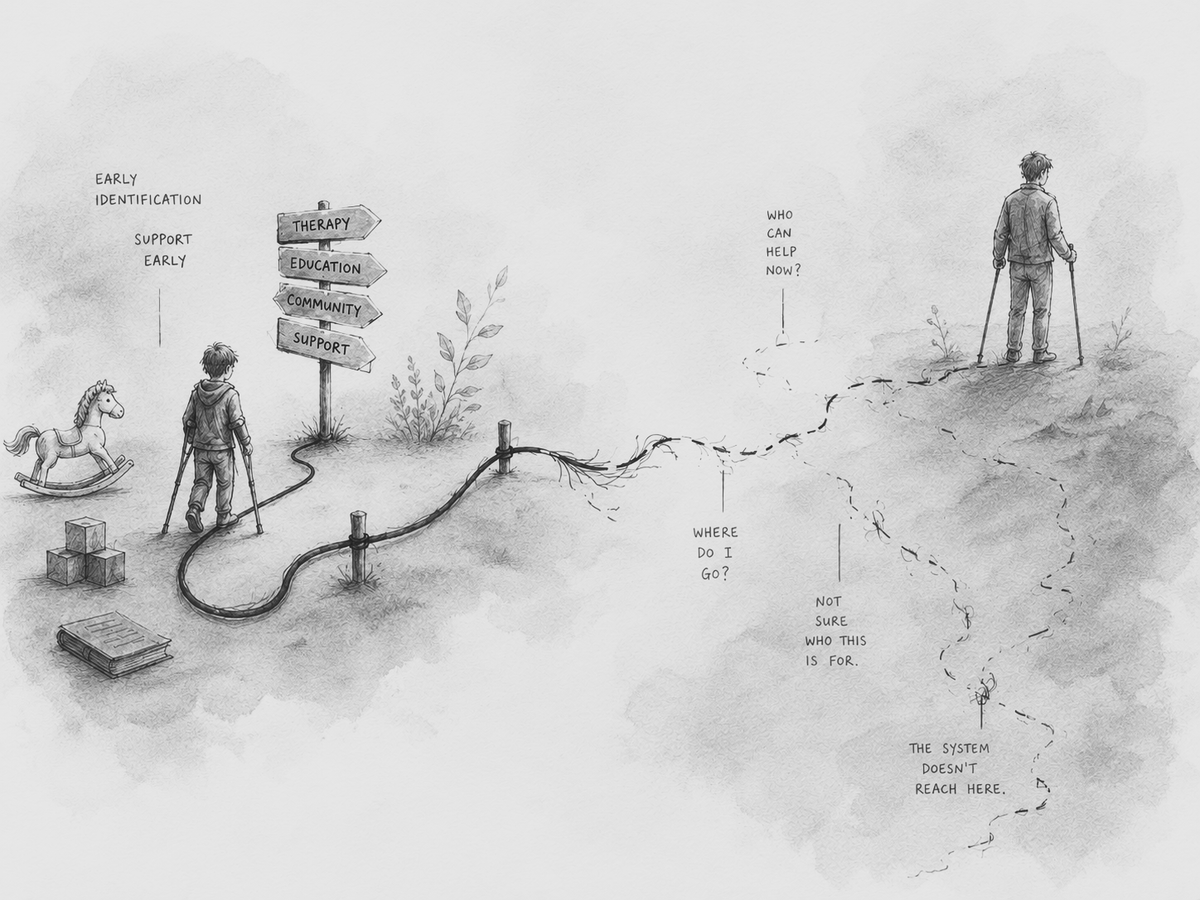
Community inclusion depends on a system that works across the lifespan. Early support shapes educational outcomes, education opens pathways to employment, and employment, in turn, supports independent living and community participation. Each part of that sequence depends on the others. When any part becomes less reliable, the effects extend across the system and build over time.
There may be fewer trained professionals entering the field, which affects service availability. Families may have fewer resources to help them navigate complex systems. Schools and service providers may have less access to guidance and support.
Participation in employment and the community becomes more uneven as a result. These changes are unlikely to occur all at once. They will emerge gradually through state-level decisions and resource constraints.
Shift From Guaranteed Support to State Discretion
At a broader level, the proposal signals a redefinition of how disability services are structured and governed. Disability services are no longer framed primarily as a federal commitment supported by targeted programs. They are repositioned as flexible areas of spending that states can adapt.
Flexibility introduces the possibility of responsiveness. It also introduces inconsistency when it is not paired with clear expectations and protections. The central issue is not whether services will continue. It is whether they will remain stable, coordinated, and accessible across communities.
Community inclusion and participation are the result of systems that have been built deliberately over time. When those systems are reduced or restructured, the effects may not be immediate. They are measurable in who is able to participate fully and who is left navigating a system that no longer functions in the same way.
What Sustaining Inclusion Will Require
In this context, the path forward requires attention and steady engagement.
Advocates, educators, and families do not need to react immediately. They do need to stay informed as these changes take shape at the state level. Tracking funding decisions, understanding shifting priorities, and recognizing where services begin to change will matter over time.
There is also a role in maintaining visibility. Asking questions, participating in local and state discussions, and sharing what is working and what is not can help ensure that these systems remain grounded in real needs. This does not require a single action. It requires consistent awareness of how the structure is evolving.
The expectation of inclusion has not changed. Sustaining it will depend on how closely these changes are understood and how steadily attention is maintained as decisions move from federal policy into state practice.


Join the conversation. Your thoughts and experiences are welcome.