
In the recent Wiley’s Walk article “The Infrastructure of Inclusion: What Is at Risk”, the focus moves beyond proposed changes to disability services to consider something less visible but more consequential, the conditions that make participation possible.
The move to consolidate funding and return more control to states is often framed as a matter of efficiency. Yet, the issue is not only what might be reduced. It is what begins to erode when interconnected programs are treated as interchangeable, even though they serve different roles in supporting inclusion.
As disability service systems continue to shift, the question expands. It is not only what is at risk, but how sustained engagement is maintained within that change, and whether inclusion is actively supported or simply assumed. This is where advocacy is often misunderstood.
Advocacy is frequently associated with moments of urgency, when programs are threatened, policies shift, or something visible is at risk. But that framing is incomplete. Advocacy is not only reactive. It is ongoing work, built into the systems that shape participation, influencing decisions before their effects are visible.
In this context, advocacy is the ongoing effort to ensure that decisions, policies, and the distribution of resources reflect what people actually need to participate fully. It is not only about speaking on behalf of others. It is about keeping systems connected to lived experience so that the support they provide reflects real conditions, not assumptions.
Participation is often described in broad terms, but here it carries a more precise meaning. It is the ability to take part in education, employment, and the community in ways that are consistent, accessible, and supported. Inclusion is not separate from participation. It is what makes participation possible in the first place.
From this perspective, advocacy cannot be reduced to a single moment; rather, it operates as an ongoing practice shaped over time. It becomes evident in the ways information travels from communities into spaces of decision-making, as well as in how policies are interpreted and implemented, not merely in how they are formally written.
From this perspective, advocacy cannot be reduced to a single moment; rather, it operates as an ongoing practice shaped over time. It becomes evident in the ways information travels from communities into spaces of decision-making, as well as in how policies are interpreted and implemented, not merely in how they are formally written. That work depends on continuity, defined as the sustained presence of attention and engagement across time. Continuity keeps awareness active beyond isolated moments of action. It requires staying engaged as decisions develop, not just when policies are introduced, but as they are implemented and begin to shape outcomes. Without that sustained engagement, awareness rarely translates into response.
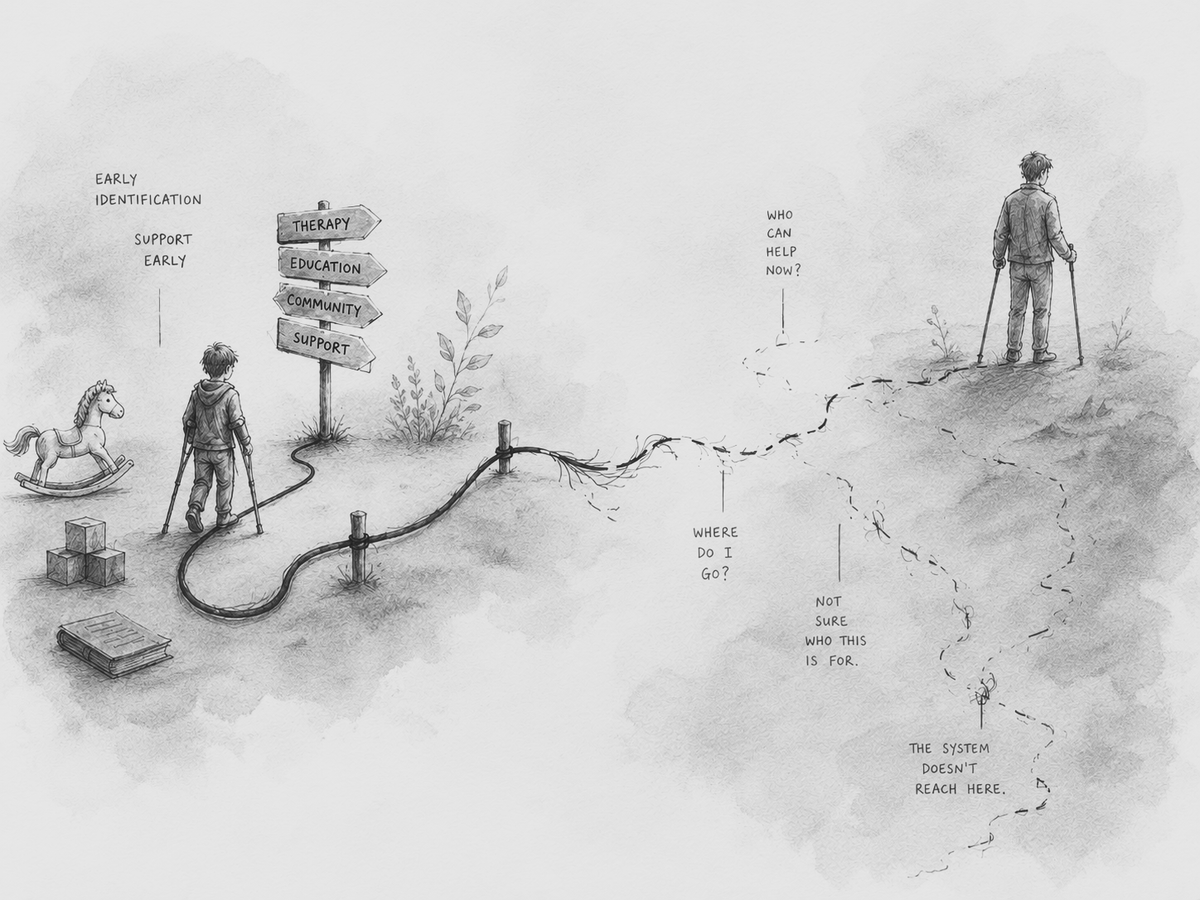
This becomes easier to see when attention shifts from policy language to what happens in practice. A preschool grant may still exist, but it may serve fewer children. The structure remains, but access shifts. These are the kinds of changes that are easy to overlook and are more difficult to reverse.
Personnel preparation programs may appear stable in the short term, yet over time, shortages begin to surface. These gaps take shape gradually and reshape classroom conditions in ways that can be traced back to earlier decisions. A similar shift can be seen in technical assistance and parent information centers. When funding is no longer specifically allocated, families may find systems harder to navigate, while schools receive less guidance in implementing services. What may seem like an isolated challenge often reflects a broader change in system capacity.
This pattern becomes more visible in vocational rehabilitation services, where supported employment opportunities may remain steady on paper while gradually narrowing in practice as state priorities change. What remains available tells only part of the story. What becomes less visible matters just as much.
The same dynamic carries into research programs and pilot initiatives, which are often scaled back with little notice. This shapes not only what is available now, but what will be developed next. It extends into civic systems as well, including voting administration, where formal supports may remain in place while changes in resources or implementation alter how accessible the process actually is. Across these examples, the pattern is consistent. Change does not always present as loss. More often, it appears as adjustment, then as difference, and only later as limitation.
Within that context, advocacy is less about opposition than about sustained attention. It keeps policy decisions connected to their real-world effects, making it possible to recognize gradual changes as they occur rather than only after they are established. Without that connection, changes often go unaddressed until their consequences are more difficult to reverse.
Identifying and Using Patterns to Inform Advocacy
If advocacy depends on recognizing these shifts, the next step is making them visible.
Systems are often evaluated through metrics, the number of people served, the programs maintained, but these measures do not fully capture how participation is experienced. A program may report high enrollment, yet families may still struggle to access services consistently or navigate them effectively.
This is where advocacy operates. It connects experience to outcomes by turning what people encounter into something that can be tracked, compared, and understood over time.
That process begins with observation, but it gains weight through consistency. When similar experiences are documented across people and across time, they begin to show something more than isolated difficulty. A single account signals concern. A pattern indicates structural change.
For example, if families encounter delays in early childhood services, those delays can be documented, when they occur, how long they last, how often they appear. Over time, what might have been dismissed becomes measurable.
The same approach applies elsewhere. In education and workforce development, reports of fewer trained specialists can be tracked through vacancies, certification gaps, and rising caseloads. In this way, workforce conditions are directly linked to changes in service delivery.
For these patterns to matter, they have to be described in a way that holds together. Instead of stating that access feels harder, it shows how longer wait times or reduced supports change what participation actually looks like in school, at work, and in the community. For that to influence decision-making, the information has to be organized and direct. Patterns are more likely to lead to action when they are presented in ways that can be clearly followed and used, whether through reports, public comment, or participation in advisory processes.
At the same time, identifying patterns is only part of the work. It also requires clearly stating what would improve conditions, such as restoring targeted funding, maintaining workforce capacity, and ensuring access to technical assistance. Timing strengthens this effort. Engaging early, remaining involved through implementation, and returning with updated information helps ensure that patterns are recognized as part of a broader shift rather than dismissed as temporary.
Advocacy Protects What Exists and Shapes What Comes Next
This shifts how advocacy functions. It is not only about responding to change, but also about maintaining the conditions that make participation possible. Many of these conditions were built over time to address gaps that were once more visible. As systems evolve, those supports do not necessarily remain consistent; they may thin out or become less reliable. Without ongoing attention, participation can become more limited, often in ways that are easy to overlook at first.
For that reason, advocacy must remain both responsive and forward-looking. It addresses what is happening now while also asking how systems will function next, particularly in areas where earlier decisions have shaped workforce capacity and access to support. In this context, systems change refers to the way policies and structures are adjusted over time, often through shifts in funding, staffing, or service delivery that accumulate across settings. It requires considering whether new approaches build on what has already been learned, and whether they expand participation or introduce new constraints.
This work continues as those changes develop, requiring attention not only to what is proposed, but to what becomes established in practice. Without continuity, changes are often recognized only after their effects are established. With it, there is a way to identify what is working, support it, and sustain it as conditions continue to take shape.
Advocacy keeps this focus across policy, practice, and implementation by attending closely to how services are delivered and experienced over time. It involves noticing when access becomes more limited, when supports become harder to use, and when outcomes begin to diverge from what systems are intended to provide, affecting inclusion and the quality of service delivery.
This level of engagement does not occur automatically. It depends on sustained involvement that connects what is happening in practice to the decisions and structures that shape it.
As these changes continue, the question is whether advocacy is consistent enough to influence outcomes. The conditions that support access, inclusion, and effective service delivery do not remain in place on their own; they reflect ongoing choices about what is maintained, what is adjusted, and what is allowed to narrow. Advocacy keeps those choices visible, linking past decisions to present conditions and making it possible to respond before patterns become fixed. In that sense, advocacy helps determine whether existing conditions are reinforced or gradually diminished. The question, then, is whether people will remain engaged, raise their voices, and continue to support what is already in place.


Join the conversation. Your thoughts and experiences are welcome.