Where Does True Inclusion Begin?


Every October, National Disability Employment Awareness Month (NDEAM) arrives with good intentions and familiar messages. Posters appear, speeches are given, and organizations remind their teams that inclusion matters. When November comes, attention often shifts elsewhere, and the focus on accessibility and inclusion begins to fade.

NDEAM was never meant to be a single date on the calendar. It was created to encourage reflection and to inspire a closer look at progress, how far it has come, and how much further it can go toward building communities, workplaces, and systems that genuinely welcome everyone.

The story of NDEAM is a story about how belonging is understood, expressed, and made real.

A Legacy of Possibility

NDEAM began in 1945 when the United States created “National Employ the Physically Handicapped Week” to help World War II veterans with disabilities return to meaningful work. What began as an effort to restore livelihoods became a broader movement to recognize the skills and potential of people with disabilities across every profession.

As understanding of disability has evolved, the purpose of the observance has grown beyond its original focus on physical rehabilitation. It now reflects a more comprehensive and inclusive view of what it means to live with a disability. This broader perspective recognizes that disability includes not only visible physical conditions but also less apparent experiences that influence how individuals perceive and engage with their environments. These include chronic pain, ongoing fatigue, and sensory processing differences that affect sensitivity to light, sound, or touch.

It also encompasses cognitive differences such as ADHD and learning disabilities like dyslexia, as well as mental health conditions including depression, anxiety, and post-traumatic stress. This evolving understanding highlights the diverse and complex ways in which disability can be experienced.

By acknowledging these varied experiences, the focus moved toward supporting the whole person and creating environments that are flexible, respectful, and responsive to different needs and abilities. National Disability Employment Awareness Month (NDEAM) came to reflect both the potential of individuals with disabilities and the shared responsibility to build inclusive environments where everyone can contribute and succeed.

Beyond Employment: Rethinking What Inclusion Means

Employment is central to independence, yet inclusion extends far beyond the workplace. Belonging is not defined by a job title or a source of income; it can be found in classrooms, neighborhoods, community settings, and the social spaces that shape everyday experience.

Conversations about access and participation are ultimately about how environments are built and how opportunity is shaped. The same barriers that limit employment often appear elsewhere: inaccessible housing, complex systems, or traditions that quietly decide who is welcomed and who is not.

NDEAM is about more than just employment; it is about reimagining what it means to participate fully. Inclusion becomes real when it is intentional, and reflected in the choices that guide how communities grow and how people are welcomed into them.

From Awareness to Action

Awareness is where change begins, but it cannot be where it ends. Each October, NDEAM opens the door to important conversations about access and inclusion. The next step is to move those ideas into consistent practice.

Meaningful inclusion takes shape when coordinated action turns awareness into progress that expands access. It grows through everyday decisions, through the design of public spaces, the structure of learning environments, and the tone of workplace culture. Progress does not come from a single group; it comes from a shared willingness to listen, to adapt, and to make inclusion part of daily experience.

Progress happens when inclusion becomes a collective effort, measured not by declarations but by steady improvement in how people are seen, supported, and included.

Building Understanding

Understanding begins with attention. It grows through observation, dialogue, and the willingness to learn from experiences different from one’s own. Listening is part of that work, but so is noticing who is missing from the conversation, who cannot enter a building, who is spoken over, or who is rarely asked for their view.

Inclusion is supported not only by intention but also by ongoing effort. It requires a willingness to listen, to learn, and to engage thoughtfully with different experiences. People with disabilities are not seeking sympathy; they are seeking opportunities to contribute, to lead, and to help shape the environments that influence their lives.

Their experiences reveal what genuine access looks like in practice. Many have developed new ways to adapt, create, and solve problems because they have had to. When those perspectives are welcomed and integrated into how communities, classrooms, and workplaces are designed, everyone benefits. This ongoing exchange of ideas and perspectives helps inclusion become more integrated and sustained over time.

Universal Design: A Framework for Everyday Access

True inclusion begins with design, not adaptation. It happens when accessibility is built in from the start, not added later to fix what could have been anticipated.

Universal Design is the practice of creating spaces, products, and systems that work for as many people as possible without the need for constant modification.

This means reimagining classrooms as adaptable spaces that support diverse learning styles. It involves designing digital documents to be fully accessible to screen readers and building sidewalks that provide seamless, uninterrupted access at every curb. It also requires structuring workplaces where flexibility is considered a fundamental part of their design and function.

These principles come to life in everyday features such as automatic doors, captioned videos, adjustable desks, and flexible work arrangements. Each of these elements exemplifies a design approach that anticipates a broad spectrum of physical, sensory, and cognitive needs from the outset.

When accessibility is part of how things are designed from the beginning, it stops being an accommodation and becomes good planning, good leadership, and good sense.

Continuing the Work

NDEAM offers an important moment of reflection, but inclusion cannot be limited to October. It must be reflected in the choices made throughout the year, in how spaces are built, how communication happens, and how opportunities are offered and shared. Progress is not measured in awareness campaigns or temporary programs. It is shaped through everyday practices that gradually make access and belonging a natural part of how communities function and grow.

Create a stronger transition and connection without being preachy, use my text: When inclusion is part of everyday practice rather than a once-a-year focus, the benefits reach everyone. People with disabilities are better able to participate fully, and the environments they engage with become more responsive and adaptable.

Meaningful inclusion takes shape in the ongoing choices made in classrooms, workplaces, and communities that approach belonging as a lived value rather than only an ideal. Its strength is not measured in declarations or events but in the quiet consistency of choices that make participation possible. It is evident in how spaces are designed, how opportunities are structured, and how people are welcomed as full participants in community life.

True inclusion becomes real when belonging is expected, not earned—when equity is built into systems and decisions from the start. It continues wherever people work together to create environments where everyone can contribute and lead. True inclusion begins when awareness becomes habit, when accessibility is built into every design, and when belonging is no longer an aspiration but a daily practice.


Why Disability Awareness Matters

In recognition of National Disability Employment Awareness Month (NDEAM)

Disability has three dimensions: impairment, activity limitation, and participation restrictions. Disability is one of the most common and least acknowledged aspects of life. How people respond to it reflects their values and approach to inclusion.

Each October, National Disability Employment Awareness Month (NDEAM) encourages individuals and organizations across all settings to consider whether opportunity and participation are truly available to everyone (U.S. Department of Labor, 2025).

At its core, NDEAM highlights three enduring principles: awareness, access, and action. It calls on communities to recognize the contributions of people with disabilities, remove barriers to participation, and build environments that value every form of ability.

Understanding Disability

Disability encompasses three interrelated dimensions: impairment, activity limitation, and participation restriction.

  • Impairment refers to a variation or loss in physical or physiological function, where physiological relates to the body’s internal functions and processes.
  • Activity limitation occurs at the individual level, reflecting challenges in executing specific tasks or actions.
  • Participation restriction involves difficulties in engaging in life situations such as employment, education, or community activities (Centers for Disease Control and Prevention [CDC], 2024, 2025).

The Centers for Disease Control and Prevention defines disability as a physical or mental condition that limits a person’s ability to perform certain activities or to participate fully in community and work environments. These are sometimes described as functional disabilities, as they influence how individuals move, learn, communicate, and connect with others (Centers for Disease Control and Prevention [CDC], 2024).

Understanding these dimensions highlights that disability is not solely a medical condition but also shaped by environmental, social, and attitudinal factors that affect participation and inclusion.

More than 28.7 percent of adults in the United States, about seventy million people, live with at least one disability (Centers for Disease Control and Prevention [CDC], 2024). In New York State, 26.6 percent of adults report living with a disability (New York State Department of Health, 2021). These are not abstract numbers. They represent people in every neighborhood, classroom, and public space. Disability is not rare. It is part of the reality that connects every community.

From Accommodation to Design

How disability is understood determines how it is addressed. The medical model views disability as an individual condition that requires treatment or adjustment. It focuses on limitations rather than access and can unintentionally place the burden of adaptation on the person rather than the environment.

The social model takes a different view. It recognizes that disability often arises from barriers such as physical, technological, or attitudinal factors that restrict participation. A person using a wheelchair, for example, is not limited by their condition but by the absence of an accessible route.

Both models hold value. The medical model shows the importance of health and support. The social model points to the broader goal of inclusion by design. When spaces, systems, and technologies are created to welcome everyone from the start, participation becomes a natural part of how communities function.

Awareness in Practice

Awareness must move beyond data and declarations. It becomes meaningful only when it drives change in how environments are planned, structured, and experienced. Physical, digital, and social spaces can either invite participation or exclude it.

The Job Accommodation Network (2023) notes that most workplace accommodations are inexpensive—61 percent involve no direct cost, and most others cost less than 300 dollars.

Simple measures such as flexible scheduling, adaptive technologies, captioned materials, and ergonomic design offer lasting benefits for everyone. These are not special accommodations but practical expressions of inclusion, which in this context means creating environments, tools, and practices that are usable and welcoming to people of all abilities and needs through intentional and thoughtful design.

Research confirms that inclusion strengthens every environment. Minkin (2023), reporting for the Pew Research Center, found that workplaces designed with diversity, equity, and inclusion in mind foster higher engagement, confidence, and collaboration among employees. Awareness, therefore, is not only a guiding principle but also a practical pathway to building stronger communities and more adaptive systems.

The Principles of Authentic Inclusion

Authentic inclusion means more than compliance with law or policy. It is about actively valuing differences as sources of strength and ensuring that everyone has real, meaningful opportunities to participate. This approach is grounded in a clear set of guiding principles that turn intention into action. These principles provide a practical foundation for building systems, relationships, and environments that uphold respect, inclusion, and genuine participation in all aspects of community and practice. Principles include the following:

  1. Accessibility as Design: Inclusion begins with the expectation that everyone participates. Buildings, public spaces, communication, and technology should be designed for broad access from the beginning, not modified afterward.
  2. Equity in practice means more than treating everyone the same. It recognizes that equal opportunity requires meeting different needs so that everyone can take part fully. Inclusion is about understanding these differences and creating support systems that allow all individuals to contribute and succeed.
  3. Nothing About Us Without Us: Inclusion requires that people with disabilities help shape decisions about accessibility and participation. Their lived experience brings insight that policy alone cannot provide.
  4. Acknowledging the whole person: Recognizing the whole person means understanding that every individual brings distinct strengths, experiences, and perspectives, including those shaped by disability. In disability culture, respect is shown by staying open-minded, asking questions instead of assuming, and choosing language that is accurate, inclusive, and mindful. For instance, rather than referring to someone as “confined to a wheelchair,” saying “uses a wheelchair” acknowledges mobility without framing it as a limitation.
  5. Inclusive Language and Interaction: Respectful communication focuses on people rather than limitations. For example, saying “a student who communicates using assistive technology” highlights ability and agency, while “non-verbal student” can unintentionally emphasize a perceived lack. Asking “Would you like assistance?” before offering help shows consideration for independence. Referring to “a person with a disability” or “a Deaf person” demonstrates respect when it aligns with how individuals describe themselves. Respect is the starting point for genuine inclusion. Through mindful communication and everyday interaction, differences reveal new perspectives and strengthen understanding.

These principles turn awareness into practice. They align with the spirit of NDEAM by encouraging proactive design, equitable participation, and recognition of every person’s contribution.

Why Disability Awareness Matters

The foundation for inclusion is reinforced by key legal protections, including the Americans with Disabilities Act (ADA), Section 504 of the Rehabilitation Act, and the New York State Human Rights Law (ADA.gov, 2024; U.S. Department of Education, 2024; New York State Division of Human Rights, 2024). However, true inclusion goes beyond legal compliance. It depends on active engagement, genuine understanding, and sustained efforts to remove the barriers that hinder full participation.

The 2025 National Disability Employment Awareness Month (NDEAM) theme, “Celebrating Value and Talent,” emphasizes that people with disabilities contribute vital skills, creativity, and perspectives that enhance every environment (U.S. Department of Labor, 2025). This message captures the essence of inclusive practice: recognizing the unique value each individual brings and understanding that inclusion is not merely a requirement but a commitment that strengthens communities and workplaces alike.

Disability awareness matters because it challenges assumptions and redefines what access and inclusion truly means. It asks whether opportunities are created with everyone in mind. Inclusion is not an act of goodwill; it reflects progress built on respect, participation, belonging.


References


Honoring Service Through Inclusion: Veterans with Disabilities and NDEAM

Each October, National Disability Employment Awareness Month (NDEAM) shines a spotlight on the talents and contributions of workers with disabilities, including millions of veterans whose service has left a lasting mark.

Their experiences remind us that honoring service also means supporting inclusion, ensuring that veterans have meaningful opportunities to participate fully in civilian life, the stage after military service when they rejoin their communities, pursue employment, secure housing, and build stability beyond active duty.

After leaving active duty, many veterans focus on securing employment, housing, and the benefits they have earned. These experiences highlight the importance of programs that not only recognize service but also help veterans build fulfilling lives as active members of their communities.


Understanding Service-Connected Disabilities

In 2025, an estimated 5.5 million veterans in the United States are living with service-connected disabilities, which are conditions caused or worsened by military service (Bureau of Labor Statistics [BLS], 2024). A service-connected disability is any injury or illness incurred or aggravated during active duty and formally recognized by the Department of Veterans Affairs (VA) as related to military service. Common conditions include hearing loss, mobility limitations, post-traumatic stress disorder (PTSD), traumatic brain injury (TBI), and chronic pain.

The VA assigns each condition a disability rating from 0 to 100 percent, reflecting how significantly it affects daily functioning and the ability to work.

  • 0 percent rating: Acknowledges the presence of a service-connected condition but does not provide monthly compensation. Veterans may still receive healthcare for the condition.
  • 100 percent rating: Represents total disability under VA criteria. Veterans who are unable to maintain gainful employment may also qualify for Total Disability based on Individual Unemployability (TDIU), which allows those with lower ratings to receive benefits at the 100 percent level if their service-connected conditions prevent them from sustaining full-time employment.
  • Intermediate ratings such as 30, 50, or 70 percent reflect partial impairment and determine the level of financial and healthcare support available.

VA benefits typically include monthly disability compensation, comprehensive healthcare, vocational rehabilitation and employment services, and education assistance. For example, a veteran with a 70 percent disability rating might receive monthly tax-free compensation, access to specialized medical care, and support to retrain for a new career through the Veteran Readiness and Employment (VR&E) program.

More than 2.2 million veterans have disability ratings of 70 percent or higher, indicating serious health and functional challenges (Research on Disability, 2025).


Life After Service: Coordinating Health, Work, and Home

Transitioning to civilian life involves more than simply leaving active duty. It requires adjusting to new routines while balancing interconnected needs such as employment, healthcare, housing, and benefits, each of which plays a role in achieving long-term stability.

For veterans with significant service-connected disabilities, particularly those rated at 70 percent or higher, this process can be especially challenging. Many face barriers related to physical and mental health, job placement, and access to coordinated services.

Progress in one area often depends on stability in another. For example, managing a chronic condition may require consistent healthcare and flexible employment, while securing stable housing may depend on reliable income and access to benefits. Coordinated support across these domains is essential to help veterans build sustainable, fulfilling lives after service.


Healthcare

Many veterans rely on rehabilitation to restore mobility and strength after injury. Mental health services, including therapy and medication, are essential for conditions such as PTSD and depression. Prosthetics and assistive devices help veterans regain independence.

However, access varies by location. Veterans located in rural areas face particular barriers, including longer travel distances to medical facilities and fewer specialists. Among these “rural veterans;”, 61 percent are enrolled in VA healthcare, and 60 percent report a service-related condition (Rural Health Information Hub, 2025). Studies have also shown that geographic and logistical challenges continue to limit access to timely care (Stryczek et al., 2023). These findings highlight both the reach of VA programs and the need to expand local access and awareness.


Employment

Employment is also central to successful reintegration. In 2024, the employment rate for veterans with a service-connected disability was 41.6 percent, compared with 52.8 percent for those without a disability (BLS, 2024). Notably, 36.5 percent of veterans with disabilities were employed in government positions, reflecting progress in public-sector hiring but highlighting continued barriers to inclusion in the private sector.

Inclusive hiring practices such as accessible application processes, reasonable accommodations, and skills-focused job descriptions are key to improving outcomes. Employers who recognize veterans’ leadership, teamwork, and problem-solving skills open pathways to employmen-related success.

Programs like Hiring Our Heroes (U.S. Chamber of Commerce Foundation, 2025) and the VA’s Veteran Readiness and Employment (VR&E) program (U.S. Department of Veterans Affairs, 2025a) help veterans prepare for and sustain meaningful employment.

Hiring Our Heroes is a nationwide initiative that connects veterans, transitioning service members, and military spouses with employers through job fairs, fellowship programs, and career development resources. It focuses on building relationships between the private sector and the military community to create lasting employment opportunities.

The VR&E program provides career counseling, job training, and education benefits to help veterans with service-connected disabilities achieve their employment goals. For those unable to work, VR&E offers independent living services that enhance daily functioning and improve quality of life through assistive technology, counseling, and life skills training.

These services illustrate how partnerships among government agencies, employers, and nonprofit organizations strengthen workforce participation and empower veterans to build stable, fulfilling careers. However, employment alone is not enough. Stability in work and life also depends on access to safe, affordable housing, which is another cornerstone of successful reintegration.


Housing

Stable housing reinforces both health and employment outcomes. Veterans with disabilities often require accessible homes, such as single-level layouts, widened doorways, roll-in showers, and ramps to maintain independence. Yet many face significant affordability and accessibility barriers, increasing the risk of housing instability. These challenges are even more pronounced for rural veterans, who contend with limited housing stock and fewer supportive services (Jones et al., 2024).

Federal programs help address these challenges:

Specially Adapted Housing (SAH) grants allow eligible veterans to build or modify homes for accessibility.

HUD-VASH, a joint program of HUD and the VA, combines rental assistance with case management to help veterans who are homeless or at risk secure stable housing (U.S. Department of Housing and Urban Development, 2025). Expanding awareness and availability of these programs is essential to ensure safe, independent living.


Progress and Ongoing Challenges

The VA continues to strengthen support systems through disability compensation, healthcare, and job training (Department of Veterans Affairs, 2025b). In 2025, a 2.5 percent cost-of-living adjustment helped benefits keep pace with rising expenses (Disabled American Veterans, 2025). Streamlined claims processing and expanded outreach have also improved access.

Still, significant gaps remain.

The employment gap reflects not only hiring challenges but also barriers to advancement, skills alignment, and long-term job stability. The care gap arises from inconsistent access to quality healthcare, mental health services, and rehabilitation. The housing gap persists as affordability, accessibility, and availability fall short of need, particularly in rural and high-cost areas. Together, these disparities undermine long-term progress and full participation in civilian life.

NDEAM emphasizes the need for coordinated policies and partnerships that align employment, healthcare, and housing to promote lasting independence and inclusion.


Moving from Awareness to Action

The shift from military service to civilian life is a profound transition, especially for the millions of veterans living with service-connected disabilities. Their experiences call not only for recognition of their service, but also for meaningful action that promotes inclusion and ensures lasting support.

Understanding the lasting effects of service is only the beginning. True commitment involves removing structural barriers to healthcare, employment, and housing so that veterans can rebuild their lives with dignity, independence, and long-term stability.

Meeting these needs requires thoughtful collaboration across sectors and a sustained effort to strengthen the systems that support veterans in civilian life. Employers can lead by adopting inclusive hiring practices and building workplace cultures where veterans feel valued and supported. Policymakers can develop and implement policies that address the complex challenges veterans face. Communities can offer practical, hands-on support to ease the transition from military to civilian life.

Careers and quality of life are not abstract ideals. They shape how veterans find purpose, security, and a sense of belonging after their service. Supporting that transition means creating meaningful opportunities for participation and building systems that are responsive to the full range of veterans’ needs.

National Disability Employment Awareness Month offers a meaningful opportunity to reflect on and renew our commitment to inclusion. It is not enough for inclusion to remain a guiding principle; it must be demonstrated through concrete action. This means ensuring that individuals with disabilities, including veterans, have access to the tools and support necessary to participate and engage in both the workplace and the broader community. The same strategies that assist veterans can also improve access, increase inclusion, and strengthen the quality of life for all people with disabilities, helping to build communities where everyone has the opportunity to take part and contribute meaningfully.


This article is dedicated to Stella Wetterhahn, who served as a nurse during World War II. Her dedication to caring for others in times of great need reflects the spirit of service that continues beyond military duty. Her example speaks to the resilience and purpose shared by generations of veterans who continue to serve in new ways after military life. KAW

References


Government Shutdowns and Disability Services: Preparing for Gaps, Protecting Access

On October 1, 2025, the federal government entered a shutdown after Congress failed to agree on a spending bill to fund operations for the new fiscal year.

The funding lapse stems from unresolved differences between Democrats and Republicans over how federal money should be allocated. The two parties disagree on how to balance spending limits with continued investment in healthcare and social programs.

Some lawmakers have emphasized the need for stricter budget controls and reductions in certain programs, while others have called for maintaining or expanding funding for health insurance subsidies, Medicaid, and public health initiatives. Without consensus, appropriations bills did not pass, and the government’s authority to spend money expired.

Although essential functions such as law enforcement, border protection, air traffic control, and in-hospital medical care continue, many other operations are significantly reduced. Social Security and Medicare benefit payments will still go out, but administrative work slows. Many federal employees in these roles are working without pay until a new funding bill is enacted.

Other federal activities experience major slowdowns or temporary suspension. Administrative services such as processing new Social Security applications, issuing replacement cards, verifying benefits, and handling appeals often face delays.

Public health and medical research at the Centers for Disease Control and Prevention (CDC) and the National Institutes of Health (NIH) may be paused. Nutrition assistance programs and federally funded childcare centers may reduce capacity or temporarily close. National parks, museums, and passport offices often operate with limited staff or shut down entirely. Federal employees not classified as essential are placed on unpaid leave, and contractors may lose work or income.

Impact on People with Disabilities

For people with disabilities, the effects of a shutdown are especially serious. Many rely on federal programs for healthcare, income support, employment services, and access to the community.

Delays in Medicaid applications and renewals can disrupt coverage for essential care. Reduced hours at Social Security offices make it harder to complete paperwork or resolve issues. Research that shapes disability policy and public health planning may stop, slowing progress in service improvement.

Employment and education are also affected. Vocational rehabilitation programs and other supports that depend on federal funding may be disrupted. Workers with disabilities in federal roles or contract positions may face furloughs. In communities, closures of accessible parks, museums, and federally supported programs limit inclusion and recreation. Although Social Security Disability Insurance (SSDI) and Supplemental Security Income (SSI) payments continue, administrative slowdowns often mean longer wait times and greater uncertainty.

Accessibility and Policy Changes

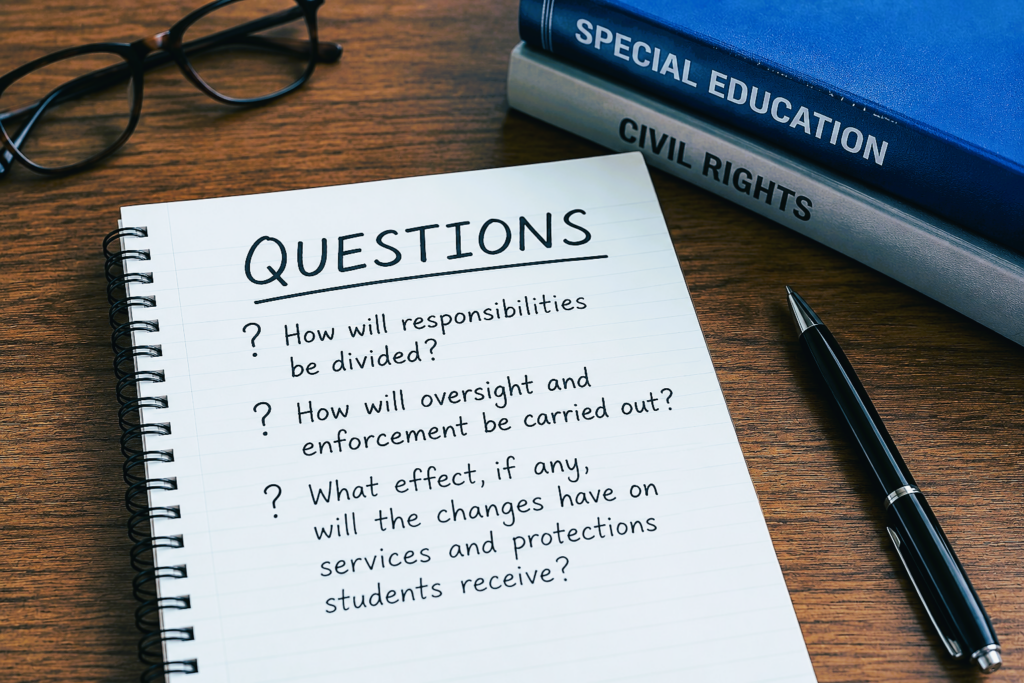
Accessibility is also shaped by both funding lapses and broader policy shifts. Many initiatives that improve physical and digital access in schools, public buildings, and transportation depend on federal support. When funding is delayed, planned upgrades or compliance reviews are postponed. Oversight from federal agencies is critical to maintaining access, but that work often slows or stops entirely during shutdowns.

At the same time, recent policy rollbacks have weakened oversight. The U.S. Department of Energy (DOE) has scaled back enforcement of accessibility requirements under the Americans with Disabilities Act (ADA) and Section 504 of the Rehabilitation Act. As a result, schools and universities may face less accountability for providing accessible facilities, materials, and learning environments. This can lead to delayed accommodations, reduced support for assistive technology, and uneven implementation of accessibility standards—creating new barriers for students with disabilities.

Broader Shifts in Disability Services

Shutdowns occur against a backdrop of broader changes to disability services. Adjustments to Medicaid funding have created uncertainty for home- and community-based supports that make independent living possible. Budget reductions for public health agencies have slowed research into disability and chronic illness. Shifts in civil rights enforcement have affected progress in housing, employment, and education. Together, these factors create instability in programs that many people rely on every day.

While shutdowns are temporary, their effects often linger. Careful planning can help reduce disruptions.

Steps Individuals and Communities Can Take

Individuals and communities can take several steps to stay prepared. People who rely on federal benefits should stay informed by monitoring updates from the Social Security Administration, the Centers for Medicare and Medicaid Services, and local offices. Clear communication is key:

  • Use multiple channels (official websites, phone hotlines, email lists, text alerts, and local news) to stay updated on service changes.
  • Check official sources regularly and rely on verified information from federal or state agencies.
  • Request accessible information in plain language, large print, captioned videos, or screen reader–friendly formats.
  • Act early—submit paperwork as soon as possible and keep detailed records of all communications.

Advocacy organizations can share accurate updates, assist with appeals or renewals, and connect individuals to temporary local support. Nonprofits and community networks may also help fill gaps when federal services slow down.

Looking Ahead

Periods of disruption underscore the importance of preparation and steady involvement. While large-scale policy decisions are often beyond individual control, people can take practical steps to influence outcomes in meaningful ways. Staying informed through official channels, maintaining organized records, and responding promptly to agency notices helps ensure continuity of care and benefits.

Constructive engagement—such as reporting service delays, submitting feedback through public comment periods, and sharing experiences with local representatives and disability councils—helps decision-makers understand where systems fall short. Participating in community meetings, collaborating with local service providers, and supporting organizations that monitor policy changes can also strengthen awareness of on-the-ground needs.

By focusing on timely action, clear communication, and thoughtful feedback, individuals and communities can help shape more dependable systems that continue to serve people effectively, even when funding lapses occur.

A stable network of support requires consistent attention from both government and the public. Individuals who stay engaged, document their experiences, and share practical insights can guide improvements that make services more reliable. When agencies, advocates, and communities work together, they create conditions where essential programs remain accessible and responsive—no matter the political climate.

Protecting access is not a one-time effort but a long-term responsibility—sustained through awareness, collaboration, and commitment to building systems that adapt and continue to meet the needs of people with disabilities well into the future. Ongoing attention and thoughtful action help ensure that vital supports remain strong, responsive, and available for all who depend on them.


Outside the Count

Patterns form quietly. Expectation settles in, and order begins to take shape. What first seems neutral — steady, reliable —gradually gathers influence. Each repetition decides what belongs and what is left aside.

Outside the Count follows these patterns and lingers with what is overlooked. Not erased, but set aside. Present, yet unacknowledged.

Outside the Count

(a poem)
By Kerry Ann Wiley

A shape takes form
unnoticed.

Some voices recur.
Others thin
before they reach.

The count proceeds.
One name never called.

One left unmarked.

Some faces return.
Others drift past,
unread.

Space alters
by omission.

Silence
marks the boundary.

Silence holds
what the count denies.
Silence carries
what’s left outside.

What does not enter
remains
outside the count.

Memory frays,
the structure
does not bend.


Reflection

Outside the Count reflects on how absence and visibility take shape within everyday forms of order. What seems like stability, built through repetition and routine, carries a sense of continuity while obscuring what slips outside the pattern.

As the pattern continues, its influence deepens. The same structure that organizes also divides, determining what is noticed and what passes unacknowledged. Through this gradual shift, order reveals its selective power: it names some and omits others.

Repetition becomes more than rhythm; it becomes a method of sorting. What begins as a neutral arrangement asserts boundaries, deciding who is called, who is left unmarked, what returns, and what fades.

Absence, once seeming accidental, becomes deliberate — not by malice, but by design.

The unspoken name, the unread face, the silence that recurs, are not oversights but outcomes of a design that holds firm.

What remains outside is still present, though unrecognized. The structure stays constant, steady in its selections, quiet in its exclusions. By staying with what goes uncounted, Outside the Count reveals how systems of order both clarify and conceal.

If recognition depends on the count, what becomes of what the count cannot see—what becomes of those left uncounted?


A Moment of Decision: What the Room Teaches

In every classroom, moments arise that reveal who belongs and who is left out. This essay reflects on the quiet choices that teach us what inclusion truly means.


There is a moment in every classroom that rarely appears in lesson plans, a moment when the room settles into its familiar rhythms and a student, often drawing on past experience, realizes that there is no place waiting for them.

Chairs slide together, voices merge into conversation, and groups form naturally around familiar faces. What looks ordinary to most becomes a turning point for the one who realizes they have been left out. The message is unmistakable: there is no place here for difference, only what fits.

In Sophia’s story, as in the lives of many people with disabilities, those whose differences set them slightly apart, and anyone whose experiences fall outside the familiar, this moment recurs. She tries to join in, to be part of the group, to take part in the work. Each time, someone says the group is full. Another says it is easier to stay with the same people. The conversation resumes without her. She walks back to her desk, her notebook open but untouched, feeling the impact of being repeatedly passed over.

The harm is steady, accumulating over days and weeks, until it begins to shape how she sees herself within the classroom. For many students with disabilities and others who feel different, experiences like this do not happen once. They repeat across lessons, projects, and school years, becoming part of the background of learning.

Bullying is often recognized by its most visible forms such as teasing, insults, or physical intimidation. These acts are clear, and their harm is easier to name. Yet some of the most damaging forms take shape through subtle exclusion and unspoken choices. They appear in the empty seat that is never offered, the group that never opens, the invitation that never comes. When someone is consistently left out, when their presence is ignored or their contributions dismissed, the message is unmistakable: they do not belong. Over time, exclusion erodes confidence, shapes identity, and limits participation.

Recognizing exclusion as a form of bullying requires careful attention. It is not only about what is said or done, but also about what is withheld. Schools play a powerful role in either reinforcing these patterns or interrupting them. When students internalize exclusion, they begin to hold back. They stop asking to join.

Over time, they come to believe that being left out is simply how it goes. Eventually, they accept it as just the way things are. Some even begin to believe it is what they deserve. The cost is not just the absence of inclusion but the slow erosion of confidence. Participation declines, sometimes disappearing entirely before anyone realizes it is happening. Yet this outcome is not inevitable.

For many children, school is where difference is first encountered. It is where the awareness of being different, and the accompanying feelings of belonging or exclusion, first take shape. These early experiences leave lasting impressions. They shape how students come to see themselves and how they learn to understand others.

In classrooms and shared learning spaces, children absorb messages about who belongs and who does not, who is capable and who is overlooked. They can be guided to recognize that people see, hear, think, learn, and move in different ways. They must also be taught to respond to those differences with empathy and respect. Recognition is only the beginning. Inclusion requires deliberate teaching and consistent practice.

This is where educators hold profound influence. Every choice made in the classroom, from the language used to the expectations set, can either reinforce harmful stereotypes or begin to dismantle them. Educators have the power to show that difference is not something to fix or fear, but something to recognize and value. Through consistent actions and daily practices, they shape the social norms that determine whether exclusion spreads or inclusion gains strength.

This responsibility is an opportunity. When inclusion is taught as a lived practice rather than a theoretical concept, schools do more than make space for every student. They help build a future where difference is met with respect rather than resistance. Subtle discrimination, including the quiet habit of treating some people as if they don’t quite belong, gives way to a culture where difference is not just accepted but engaged. Everyone participates as they are. Acceptance alone is not enough. Inclusion means creating conditions for participation, where every person contributes and belongs, not in spite of difference, but because of it.

Creating a culture of inclusion and belonging does not happen on its own. It takes deliberate effort and consistent attention. It begins when someone notices who has been left out and decides to act. It may start with a teacher who looks around the room before assigning work, making sure every student has a place. It may be seen in a student who chooses to move a chair to make room for someone else. It is reflected in classrooms that plan ahead so that every learner is considered and every voice has space to be heard.

Each choice to support genuine inclusion affirms that every student matters and that their presence is wanted. Each act reinforces the understanding that participation is not conditional. It is a given, and is expected. Creating schools where all students feel they belong means moving beyond slogans and good intentions.

Inclusion must be visible in daily routines. It must shape how groups form, how projects begin, and how effort is recognized. Achieving this vision requires intentional structures that make inclusion a consistent and lived experience, not an aspiration.

Positive Behavioral Interventions and Supports (PBIS) provides a framework for building inclusive and predictable learning environments by explicitly teaching and reinforcing positive behaviors. Social and Emotional Learning (SEL) nurtures empathy, self-awareness, and relationship skills that help students understand and support one another.

Restorative practices create structured opportunities for honest dialogue, shared understanding, and re-engagement when exclusion occurs. These approaches turn the principle of inclusion into daily practice. Yet no framework replaces the decision to notice and respond. The true measure of inclusion and belonging is found in the choices made each day. Ultimately, inclusion is not just built through systems, but through moments—those decisive points where someone chooses to see, welcome, or turn away.

Every day, in classrooms across the country, these choices quietly shape who belongs and who does not. Another student will pause before approaching a group. Another set of chairs will draw together. Another moment of decision will arrive. Each of these moments carries the power to affirm or exclude, to preserve what feels comfortable or to expand what is possible. The question is not whether inclusion is possible—it is—but who will choose to make it real.


Sophia’s Seat: Lessons on Belonging, Bullying, and Change


Sophia watches as groups form. Chairs scrape, voices rise. She lingers, waiting for an opening that never comes. Chairs pull close. Voices drop and heads lean in. Plans form in whispers. She is not invited to join.

When the teacher asks the class to find partners for the next project, Sophia takes a breath and walks toward the group she has tried to join before.

One student glances at her and says, “We already have enough people.” Another mutters, “It’s just easier when we stick together.” A third laughs quietly and looks away. Sophia hesitates, then turns back to her desk. The group’s conversation resumes without her.

It is the third time this month. Each time, the same pattern unfolds: rejection, whispered comments that sting, and uneasy glances that follow. Sophia walks back to her seat, her face warm with embarrassment. She opens her notebook and writes a few lines she does not finish.

A few minutes later, the teacher looks up from her desk and notices Sophia sitting alone. “Sophia, do you have a group yet?” she asks. The room is quiet. The teacher pauses, scanning the room, realizing what has happened. “Alright,” she says, “we’ll find a group for you.” But the moment has passed. The laughter has faded, and Sophia’s shoulders are already hunched over her notebook.

Each time, it is the same pattern—unspoken, consistent, and isolating. It reminds her she does not belong. Sophia’s story reflects a form of bullying often overlooked.

Sophia’s experience illustrates a broader reality for many students with disabilities—one that data confirms and educators must address.


Bullying Often Begins Quietly

Bullying may initially surface as being left out of group activities, as jokes that mask ridicule, or as the intentional disregard of someone’s presence. For many students with disabilities, these behaviors become part of their everyday experience. Each moment sends the same message: difference is noticed, and it is not accepted.

Bullying continues to be a significant and widespread issue throughout the United States. Despite federal protections, school-based interventions, and public awareness campaigns, students with disabilities continue to be disproportionately affected. This reality reflects not only individual behaviors but also broader systemic challenges in fostering environments where disability is acknowledged as a valued dimension of student identity and inclusion is a shared responsibility.

What Bullying Really Is

Bullying is repeated behavior that causes harm, embarrassment, or exclusion. It happens when someone consistently acts in ways that single out or demean another person. These actions may be direct, such as teasing or name-calling, or indirect, such as exclusion or silence (CDC, 2024a).

Bullying is not the same as conflict. Conflict can be resolved. Bullying persists and sends a message that a person is not valued or accepted. Over time, it changes how someone participates, interacts, and experiences school (APA, n.d.).

When bullying targets a student because of disability, it reinforces negative stereotypes and communicates that difference is unwelcome. These experiences shape how students engage with learning and with others.

What the Numbers Show

A review of data from 2021 to 2025 reveals a consistent and troubling pattern: bullying remains widespread, and students with disabilities experience it more frequently and with more serious effects than their peers.

In 2021, the Youth Risk Behavior Survey reported that 15% of high school students were bullied at school and 16% experienced cyberbullying (CDC, 2023). In 2022, 19% of students ages 12 to 18 said they had been bullied, with 22% reporting electronic forms such as social media (NCES, 2024). By 2023, bullying rates increased again, with 19% of students reporting in-school bullying (CDC, 2024b). Research during this period continued to show a strong association between peer victimization and symptoms of anxiety and depression (Ye et al., 2023).

In 2024, the National Center for Health Statistics reported that 34% of U.S. teenagers experienced bullying within the past year. The rates were significantly higher among adolescents with developmental disabilities, 44% of whom reported being bullied, compared with 31% of their peers without developmental disabilities (Haile et al., 2024). This 13-point gap indicates that bullying is more common among youth with developmental and other disabilities and illustrates a clear disparity in bullying experiences between adolescents with and without developmental disabilities.

The study also found a strong link between bullying and mental health, identifying it as both a social issue and a public health concern. As a public health concern, bullying extends beyond individual experiences to affect the health of entire communities. It contributes to higher rates of anxiety, depression, self-harm, and school avoidance, which place greater demands on mental health services and education systems.

These figures are more than just statistics; they reflect real experiences of exclusion and emotional distress that can shape how adolescents understand their feelings, manage emotions, build confidence, and form relationships. A supportive environment helps them express emotions in healthy ways and cope with challenges, while bullying can lead to anxiety, loss of confidence, and withdrawal from others, affecting learning and social growth.

Other research supports these findings. Studies show that children and teens with disabilities are two to three times more likely to experience bullying than their peers without disabilities (PACER Center, 2024). In 2025, findings from several national studies confirm that disability-based bullying remains a structural issue, meaning it is shaped and reinforced by the way systems, policies, and cultural expectations function. Despite awareness campaigns and intervention efforts, disparities persist, showing that the problem arises not only from individual behavior but also from broader cultural patterns.

Bullying persists because misconceptions about disability remain common. Too often, disability is viewed in terms of limitation rather than contribution. Accommodations may be misinterpreted as unfair advantages, creating resentment or misunderstanding (Swearer et al., 2022).

Students with disabilities often have smaller social networks, making them more vulnerable to exclusion. Subtle forms of bullying, such as avoidance or dismissive comments, are harder to detect and often go unaddressed. When disability is left out of conversations about inclusion, biases remain unexamined.

The Broader Impact

The effects of bullying go far beyond the moment they happen. Research shows a clear link between bullying and increased anxiety, depression, social withdrawal, and lower engagement in school (APA, n.d.; Ye et al., 2023). Students who are excluded again and again may stop speaking up in class, avoid working with others, or shy away from using supports that make them stand out.

These effects often persist into adulthood. Research shows that adults with disabilities who experienced bullying in childhood report higher levels of emotional distress and face greater challenges in forming and maintaining relationships, which can significantly affect their overall well-being and ability to take part fully in daily activities (Christ et al., 2025).

Emotional distress refers to psychological suffering marked by strong negative emotions such as sadness, anxiety, or anger. It can make it difficult to think clearly, build healthy relationships, and manage daily responsibilities, and over time, it can impact both mental and physical health.

Bullying isn’t just a phase that passes. The effects of bullying last far beyond the moment it happens. It can alter how a person views themselves and relates to others, with consequences that can persist long after childhood.

What Schools Are Doing

Federal law requires schools to take action when bullying interferes with a student’s access to education. Under Section 504 of the Rehabilitation Act and the Americans with Disabilities Act, bullying based on disability is recognized as discrimination, and schools must respond (U.S. Department of Education, OCR, n.d.).

To meet these responsibilities, many schools use interventions that encourage empathy, set clear standards for behavior, and strengthen relationships. Examples include Positive Behavioral Interventions and Supports (PBIS), Social and Emotional Learning (SEL), and restorative practices.

Understanding PBIS and SEL

To effectively counter bullying, schools need more than rules; they need comprehensive frameworks that foster empathy and teach responsibility. Three evidence-based approaches stand out: Positive Behavioral Interventions and Supports (PBIS), Social and Emotional Learning (SEL), and restorative practices.

Positive Behavioral Interventions and Supports (PBIS) is a proactive approach that encourages positive behavior by setting clear expectations, such as being respectful, responsible, and safe, and by teaching and reinforcing these behaviors consistently.

Positive behavior includes actions that help create a safe, respectful, and supportive learning environment. Examples include listening when others speak, using polite language, completing assignments on time, and following classroom rules. When students meet these expectations, schools acknowledge their efforts and celebrate their success. Over time, this approach builds a culture of safety, belonging, and mutual respect.

PBIS is implemented across three tiers of support:

  • For everyone: clear school-wide expectations and recognition
  • For some: targeted support for students who need additional guidance
  • For a few: individualized plans for students with greater behavioral challenges

Research shows PBIS can reduce disciplinary incidents, improve attendance, and strengthen school safety (Bradshaw et al., 2022; Freeman et al., 2016).

Social and Emotional Learning (SEL) helps students understand their feelings, manage emotions in healthy ways, build strong friendships, and make good choices. Lessons focus on empathy, self-awareness, and problem solving—skills essential for success in school, work, and life. SEL includes:

  • Classroom discussions about emotions and stress
  • Activities to build kindness and cooperation
  • Reflection exercises tied to academics
  • Daily routines that encourage connection

Research shows that Social and Emotional Learning (SEL) programs improve academic performance, increase engagement, and lower stress (Taylor et al., 2023; Durlak et al., 2011). Positive Behavioral Interventions and Supports (PBIS) establishes clear expectations for behavior, while SEL provides the skills students need to meet them. Together, these approaches help reduce bullying and promote a culture of respect in schools.

Restorative Practices

Restorative practices offer a structured way to handle conflict or harm. Students and staff meet in a guided conversation to discuss the incident, understand its impact, and agree on steps to address the harm. This could include a direct apology, replacing damaged items, helping with a task, or participating in a follow-up conversation. The approach focuses on responsibility instead of punishment. In practice, restorative approaches may include:

  • Restorative circles: sharing perspectives and feelings about incidents
  • Mediated conversations: guided discussions to address harm and plan repair
  • Community agreements: shared expectations created by the group
  • Reflection activities: writing or discussion used to plan better choices

Research shows restorative practices can reduce repeated incidents of bullying, improve relationships, and strengthen a sense of safety and belonging (Gregory et al., 2016; Anyon et al., 2016).

What Change Looks Like

Before PBIS and SEL training, the teacher in Sophia’s class struggles to recognize the early signs of harm.

Sophia watches as groups form for a project. When she approaches a group she has tried to join before, someone says, “We already have enough people.” Another adds, “It’s easier when we stick together.” Quiet laughter follows.

Sophia returns to her seat, pretending to write as the class settles into work. The same pattern has played out with small comments, exclusion, and embarrassment. A few minutes later, the teacher notices she is alone, but the moment to prevent harm has already passed.

After SEL and restorative practices training, the teacher approaches the same situation differently. When another group project begins, she scans the room and sees Sophia waiting, notebook open. Nearby, a familiar group begins pulling chairs closer. Before the pattern can repeat, the teacher steps forward. “Before we start,” she says, “let’s take a moment to make sure everyone has a place. Working together means inviting in every voice.”

The room grows quiet. Students shift. The teacher turns to the group Sophia has been trying to join. “I see some space here. How can we make sure everyone feels included?”

A student nods. “She can work with us.”

“Thank you,” the teacher says. “Now, talk about how you will make space for each idea. That is part of the work too.”

Later, the teacher checks in with the group. “What was different about how we started today?” she asks. The students reflect on how it felt to notice, include, and listen. A simple shift, an early and intentional step, turns a moment of exclusion into a lesson in empathy and belonging.

By addressing the behavior as it happens, the teacher prevents harm and helps students practice inclusion in real time. These small, consistent actions model accountability and care—core elements of a safe and supportive learning environment.

A Path Forward

Through PBIS, schools reinforce positive behavior and set clear expectations. SEL equips students with emotional skills to manage conflict and show empathy. Restorative practices give educators structured ways to respond to harm, clarify expectations, and resolve conflict. These strategies establish clear standards for behavior and consistent responses to harm. They also improve how schools handle conflict and strengthen relationships between students and staff.

When students see difference respected, they are more likely to offer respect in return. Policies alone do not build culture; consistent acts of inclusion and understanding do. Meaningful change often begins quietly.

It may start when a teacher notices a student left out and invites her to join, or when a classmate offers a seat. These small gestures communicate value and belonging.

Sophia’s experience shows how bullying can appear through repeated exclusion, with comments that dismiss, laughter that isolates, and refusals that leave her standing apart. These actions are not harmless or coincidental; they send a message that she is unwelcome. For students with disabilities, this pattern is far too familiar, shaping how they see themselves and how others respond to them.

Though subtle in form, the impact is significant, undermining belonging, limiting participation, and eroding confidence. Recognizing this behavior as harmful is essential because acknowledgment is the first step toward accountability and change.

Addressing bullying requires more than awareness; it calls for consistent and intentional response. Schools that adopt frameworks such as PBIS, SEL, and restorative practices foster environments where respect is expected, empathy is taught, and exclusion is challenged.

These approaches help students understand the weight of their actions and equip educators to step in before harm grows. Lasting change emerges when inclusion becomes part of everyday practice, when each student has a place to participate and a reason to feel valued. In such classrooms, isolation gives way to belonging, and belonging becomes the standard rather than the exception.


References


Rethinking Access: Understanding Federal Policy Shift


Abstract

As of September 12, 2025, the U.S. Department of Energy no longer requires buildings receiving its funding to meet long-standing accessibility standards under Section 504 of the Rehabilitation Act. The department’s decision, issued through a direct final rule, has sparked significant concern among disability rights advocates and legal scholars.

Many warn that this change weakens civil rights protections and creates uncertainty about federal commitments to inclusion. This article traces the history of these requirements, examines the rationale behind the department’s action, and reflects on the broader implications of shifting accessibility from a consistent obligation to a discretionary choice. The policy invites renewed attention to how government decisions convey public values and shape opportunities for participation.


Introduction

Public policy communicates more than procedures. It expresses the values and priorities that shape how government serves its people. When the federal government sets conditions for the use of public funds, it not only determines practical outcomes but also affirms commitments to access, opportunity, and inclusion.

For more than fifty years, accessibility has been central to that commitment, ensuring that people with disabilities can participate in spaces built and supported through public investment. The Department of Energy (DOE) long upheld these principles in the projects it funded. Yet its recent decision marks a significant shift, one that redefines how accessibility is treated in federally funded construction and renovation.


Historical Context

Accessibility requirements for federally funded buildings emerged from the broader civil rights movement of the twentieth century. In 1973, Congress enacted the Rehabilitation Act, which prohibited discrimination based on disability in any program or activity receiving federal financial assistance. Section 504 of that Act established the expectation that federally supported facilities would be accessible to people with disabilities.

In 1984, the Uniform Federal Accessibility Standards were adopted to guide implementation. These standards provided flexibility while maintaining a clear goal: to achieve accessibility to the maximum extent feasible. They ensured that public investments served everyone, reflecting a longstanding commitment to equity and shared benefit.

For decades, federal agencies, including the DOE, applied these standards when funding construction or renovation projects. Accessibility was treated as an essential component of public investment—a practical expression of inclusion.


Policy Change

On May 16, 2025, the U.S. Department of Energy (DOE) announced that it would rescind its Section 504 accessibility rule through a direct final rule process. The DOE argued that other federal non-discrimination requirements make the rule unnecessary and described it as burdensome. The agency stated that it intends to provide private entities with greater flexibility in determining how they meet accessibility obligations.

After receiving more than 20,000 public comments—many expressing concern or opposition—the DOE delayed the effective date to September 12, 2025, when the rescission took effect.


Concerns Raised

Disability rights advocates and legal scholars continue to warn that the DOE’s decision conflicts with both Congressional intent and established court rulings. Section 504 regulations were written into the Rehabilitation Act and have been upheld repeatedly by the courts as necessary to ensure access.

Critics also question the use of the direct final rule process, which is typically reserved for administrative changes unlikely to draw opposition. They fear that this approach sets a precedent for other agencies, potentially opening the door to a gradual rollback of accessibility protections across the federal government.

With more than eighty sets of Section 504 regulations guiding federal agencies, the DOE’s action raises pressing questions about whether others might follow.


Practical Effects

Organizations receiving DOE funding are no longer required to make their buildings accessible as a condition of that funding. Projects aimed at improving energy efficiency or modernizing facilities can now move forward in spaces that remain inaccessible to people with disabilities.

Accessibility features such as ramps, elevators, accessible entrances, and wider doorways—once considered standard—have become optional. While organizations that receive federal funds remain subject to general non-discrimination laws, those laws are usually enforced only after barriers are reported. This reactive approach places the burden on individuals to file complaints rather than ensuring accessibility is built in from the start.

As a result, accessibility now varies widely across projects, depending on how each organization interprets its responsibilities. What was once a consistent national standard has become uncertain and inconsistent.


Looking Forward

When specific accessibility requirements are lifted to allow for greater flexibility, does this create more opportunity or more uncertainty? Who then ensures access—organizations or individuals? For people with disabilities, accessibility is not a preference but a condition for meaningful participation and independence. Can a system truly be inclusive if access is not intentionally built in from the start?

Policies that appear to simplify administration carry long-term consequences. They shape not only how spaces are built but how people experience them. A building that is difficult to enter is more than inconvenient; it reflects a failure to meet the standard of service the public deserves.

The coming months will reveal whether this change remains an isolated adjustment or becomes part of a broader shift in how inclusion is defined in federal policy. The outcome will be reflected not only in official regulations but in the daily realities of those who use—or are excluded from—the spaces supported by public funds.

Even after a policy is set at the federal level, there are ways to strengthen and safeguard accessibility. Agencies can adopt internal standards that go beyond the minimum, communities can provide feedback through advisory boards and public consultations, and individuals can document and share their experiences to highlight where access falls short.

Paying attention, asking thoughtful questions, and staying engaged throughout implementation are quiet yet powerful ways to ensure accessibility remains a shared and ongoing responsibility across all levels of governance. Federal policy may provide the framework, but it is public engagement that gives that framework meaning in practice. Public officials are accountable to the communities they serve, and consistent, constructive engagement can shape how a policy is interpreted, implemented, and refined over time. The passage of a policy is not the conclusion of the conversation; rather, it marks the beginning of a new phase—one where public voices matter most.

Engagement can take many forms, including:
Collaborating with elected representatives: Even after a policy passes, lawmakers can propose amendments, hold oversight hearings, or introduce new measures to address emerging concerns. Consistent outreach through letters, meetings, and testimonies helps keep accessibility visible and prioritized.
Advocating through administrative channels: Agencies often have flexibility in how they apply policy. Advocates can encourage strong guidance, thoughtful interpretation, and consistent implementation to ensure accessibility goals are fully realized.
Participating in media and public dialogue: Sharing lived experiences through news stories, community forums, and open discussions brings policy impacts to life and encourages reflection on what still needs to change.

Persistent and thoughtful engagement across institutions, governance, and public dialogue ensures that accessibility is upheld not as a procedural formality, but as a continuous and shared responsibility. Meaningful change begins with awareness and is strengthened through deliberate, sustained participation.

If flexibility defines the system, the true test lies in whether it anticipates access and embeds inclusion as foundational principles—or responds only when compelled. Efficiency, in its most responsible form, is not measured by speed or convenience, but by the extent to which decisions intentionally advance accessibility and inclusion for those most affected.

The strength of a system is revealed not only in the policies it enacts, but in the principles it chooses to uphold. Flexibility offers opportunity, but without intention, it can drift from its purpose. Anticipating access and embedding inclusion must remain central to how public investments are imagined and implemented.

Upholding accessibility requires more than compliance; it calls for attention, participation, and a shared commitment to ensuring that access is designed into every decision. The measure of progress will be found in spaces that welcome all, not in those that require permission to enter.


NDEAM: Where Awareness Meets Action

Excerpt:
Awareness is the starting point, not the finish line. NDEAM reminds us that inclusion is not a statement but a structure, shaped through accessible design, informed leadership, attentive culture, and partnerships that open doors. Progress shows what is possible when participation becomes part of how work is built.


When National Disability Employment Awareness Month (NDEAM) was first established, it was born out of a national reckoning. Returning from World War II, thousands of veterans carried visible and invisible injuries. Many faced workplaces unprepared to see their value or make room for their skills. In 1945, Congress responded by creating a week of recognition, urging employers to look past disability and focus on what people could contribute. It was a call to rebuild not only the economy but the understanding of who belonged in it (U.S. Congress, 1945).

At its heart, NDEAM was meant to challenge assumptions about work and worth. It asked a country emerging from war to reconsider what it meant to participate, to see ability where bias might once have seen limitation. Over time, the observance expanded, reflecting a growing awareness that barriers to employment were not only physical but social, structural, and systemic (U.S. Congress, 1988).

Eighty years later, the question lingers. Has this awareness achieved what it set out to do? In many ways, yes. Opportunities have widened, employment rates have improved, and more organizations now build inclusion into the way work is structured, from how jobs are advertised and interviews are conducted to how technology, spaces, and policies are shaped to support participation. Yet uneven access, persistent stigma, and outdated practices continue to hold some people at the margins (Office of Disability Employment Policy [ODEP], 2025).

NDEAM remains relevant because the work it began is not finished. It reminds us that inclusion is not a gesture but a structure, one that must be built and rebuilt until participation becomes ordinary, not exceptional.

Inclusion as the Foundation of Belonging

Belonging begins with inclusion.
Inclusion is the practice of designing environments where people with disabilities participate fully and naturally with their peers, not apart from them. It ensures that everyone has access to the same opportunities, responsibilities, and expectations, and that contributions are recognized for their value, not defined by difference. Inclusion is not a separate track or accommodation; it is the shared foundation that allows all people to engage in meaningful work together (ODEP, 2025).

Its strength rests on several core principles:

  1. Access: Everyone must have equitable entry to opportunities, tools, and spaces, both physical and digital, that support participation.
  2. Representation: Decision-making and leadership reflect the range of experiences and perspectives within the workforce.
  3. Participation: Each person works and learns in shared environments with equal opportunity to contribute, grow, and lead.
  4. Respect: Every contribution is acknowledged and valued, with difference recognized as a source of insight and strength.
  5. Commitment: Inclusion is sustained through deliberate action, continuous learning, and the willingness to adjust as needs and understanding evolve.

When these principles guide design, inclusion becomes more than an idea. It becomes the structure that shapes how work is organized, how relationships form, and how belonging takes hold.

Work can offer many things: a place to contribute, a sense of purpose, and connection to others. Yet these depend on whether the environment supports full participation. Without inclusion, these opportunities are limited to some. With it, belonging becomes possible for all.

Inclusion is built into the everyday details of work: how jobs are described, how interviews are conducted, how meetings are held, and how success is recognized. It is not measured by statements, but by who is present and who has the chance to lead.

NDEAM reminds us that inclusion is not a campaign or an annual theme. It is the groundwork that allows people to participate fully and belong completely.

Signs of Progress

When inclusion becomes intentional, progress follows. The Bureau of Labor Statistics reported that in 2024, the employment–population ratio for people with disabilities reached 22.7 percent, the highest since data collection began in 2008 (Bureau of Labor Statistics [BLS], 2024). Behind that number are shifts in how organizations think about participation, access, and shared responsibility.

One of the most visible changes has been a more flexible approach to how and where people work. Options that allow individuals to balance responsibilities, choose accessible settings, and adapt their schedules have opened doors for many who once faced barriers. Flexibility has become part of thoughtful design, showing that inclusive practices often benefit everyone.

This broader understanding of access has extended into technology. More organizations now build accessibility directly into their tools and systems. Features such as captioning, screen reader compatibility, and inclusive meeting platforms are becoming standard, reflecting a move toward workplaces where everyone can engage from the start (ODEP, 2025).

Efforts to advance inclusion have strengthened employee engagement and participation. Employee networks are voluntary, employee-led groups that bring together people with similar backgrounds, interests, or experiences. They provide support, mentorship, and advocacy, and help shape more inclusive workplace policies and practices. Disability-focused networks, in particular, create spaces where employees share their experiences and offer insights that guide improvements to policies, programs, and workplace culture.

In the context of inclusion, culture reflects the everyday values, behaviors, and practices that determine whether people feel respected, heard, and supported. As organizations strengthen this culture, leadership plays a critical role in sustaining progress.

Leadership, in turn, is beginning to carry inclusion as a shared measure of success. Some organizations now link progress in creating inclusive workplaces to performance reviews and public reporting. This approach makes inclusion visible, measurable, and ongoing rather than optional or symbolic.

Beyond the workplace, partnerships with schools, training programs, and community organizations are helping create clear pathways into meaningful employment. Internships, apprenticeships, and mentoring opportunities designed with accessibility in mind ensure that preparation leads to participation.

These developments mark important progress, showing that inclusion is becoming more embedded in how communities and organizations operate. Yet they also highlight that the work is ongoing—real inclusion depends on steady commitment to building systems and practices where participation is consistently valued, supported, and put into action.

Where Gaps Remain

Progress is evident, yet it is not complete. Employment rates have improved, but participation remains uneven. The unemployment rate for people with disabilities is still roughly twice that of those without (BLS, 2024). The difference points to persistent gaps in how opportunity is built, sustained, and understood.

One gap lies in design. Many hiring systems and workplace processes were created without full inclusion in mind. Automated screening tools often favor conventional career paths or communication styles, overlooking qualified candidates. Application systems that are not compatible with assistive technology can quietly exclude participation before it begins. Addressing this requires accessible systems that anticipate varied needs and are tested for usability across experiences.

Another gap exists in infrastructure. Reliable transportation, stable housing, and access to child care are essential for sustained employment. When these supports are limited, participation becomes fragile. Addressing this requires a more integrated approach. Coordinated access means making it easier for people to find and use the services and supports they need by connecting them through a single, organized system. Instead of navigating separate programs on their own, individuals get help through a streamlined process that brings key resources together. With the right supports in place, people are better able to secure and maintain steady employment (ODEP, 2025).

A third gap lies in perception. Disability is often viewed only as a limitation instead of as part of the diversity that makes a workforce stronger. Here, diversity means the different experiences, perspectives, and approaches people bring to work. For example, an employee who uses assistive technology may spot ways to make digital tools easier for everyone to use.

A team member managing a health condition might suggest flexible scheduling practices that benefit the whole team. Someone with experience navigating physical barriers could help improve workplace layouts or customer access. Seeing disability in this way shows its value in widening understanding, fueling creativity, and improving problem-solving. When disability is recognized as a source of insight and innovation, organizations make better decisions and build workplaces that work for more people.

Turning this understanding into action requires deliberate effort. Bridging these gaps depends on steady, practical attention. Systems can be redesigned for accessibility. Supports can be aligned to reduce barriers beyond the workplace. Training and communication can reflect an understanding that inclusion strengthens participation for all. Each step, though incremental, builds a more stable foundation for belonging.

Turning Awareness into Action

NDEAM is more than an observance; it is a reminder to look closely at whether inclusion exists in practice or only in principle. Awareness brings visibility, but lasting change depends on how that awareness is translated into structure and action (ODEP, 2025). Turning awareness into meaningful progress begins when inclusion becomes part of everyday decisions and expectations rather than a separate effort.

That work often starts with how spaces, systems, and tools are designed. When accessibility is built into technology, physical environments, and communication methods from the beginning, participation becomes an ordinary part of how work is done rather than an exception that must be accommodated later.

Leadership plays an equally critical role. Managers and supervisors shape daily experiences of work, and their understanding of inclusion determines how decisions are made. Preparing leaders through thoughtful training that blends awareness with practical strategies helps ensure that policies and practices reflect a commitment to full participation.

A culture of inclusion sustains this work. Everyday interactions, how colleagues communicate, share information, and adapt to different ways of working, bring policies to life. When openness and respect are part of daily practice, inclusion becomes less about compliance and more about connection. Culture ensures that inclusion is lived, not just written.

Partnerships broaden the reach of inclusion by connecting workplaces with the communities around them. When employers collaborate with schools, training programs, and local organizations, they not only expand access to talent but also help shape learning and support systems that reflect real workplace needs. These efforts create stronger pipelines, more responsive programs, and better long-term outcomes for workers and employers alike.

Looking Forward

Eighty years after its creation, NDEAM remains a necessary reminder. Employment rates have improved. Practices have shifted. Conversations about disability and work are more informed and inclusive. Yet participation continues to evolve, and belonging remains an ongoing effort—one that requires attention, commitment, and renewal over time (BLS, 2024).

The progress made deserves recognition, yet it also reveals where work is still needed. Inclusion is a continual practice, built through everyday choices in hiring, collaboration, and decision-making. It deepens through attention to the details, such as how opportunities are shared, voices are invited, and rules are shaped.

If inclusion builds the structure, what choices will make belonging an ordinary expectation rather than an exception?

Belonging depends on intention. It grows when organizations move beyond compliance toward culture—when policies translate into practices that affirm value and expand opportunity. The promise of NDEAM lies not only in reflection, but in action: renewing commitment to workplaces where every person’s contribution is recognized, and where participation is not granted, but expected.


References

  • Bureau of Labor Statistics. (2024). Persons with a disability: Labor force characteristics: 2024. U.S. Department of Labor. https://www.bls.gov/news.release/disabl.nr0.htm
  • Office of Disability Employment Policy. (2025). National Disability Employment Awareness Month (NDEAM) 2025 theme: Celebrating Value and Talent. U.S. Department of Labor. https://www.dol.gov/agencies/odep/initiatives/ndeam
  • U.S. Congress. (1945). Public Law 176: Joint resolution designating the first week in October as National Employ the Physically Handicapped Week. 79th Congress.
  • U.S. Congress. (1988). Public Law 100-630: Expansion of National Employ the Handicapped Week to National Disability Employment Awareness Month. 100th Congress.

The Door May Narrow

It begins quietly, almost imperceptibly. Desire stirs — a move toward a job, a dream, a love, a chance — and for a time, the way seems open. The horizon widens, clear and promising, as if life itself has said yes. The welcome feels sincere, the invitation real.

Then the limits come, subtle at first, then sure. Conditions surface—small, but firm. The space closes, its limits sharpening. A question rises and lingers: was the door ever truly open?

This is the space between hope and hesitation, when promises sound different up close and kindness comes with limits. Time reveals what fails, and what remains.


The Door May Narrow

(a poem)

By Kerry Ann Wiley

Welcome wears velvet gloves,
but the fingers tighten.
An open door,
hinged with fine print.

Every yes arrives with a receipt.
Freedom out of stock.
Hope on back order.
Please hold.
The voice will return.
The answer may not.
Thank you for waiting.

Help comes,
but never enough to stand on.
A hand extended,
measured to the inch.

Still,
beneath what is denied,
a truth survives:
life without measure,
worth without witness.

The door may narrow,
but presence widens it.
Even in silence,
a will remains,
unmeasured,
unacknowledged,
without witness,
without permission,
whole.

As the door closes and the offers begin to fade, the space that once welcomed starts to shrink. What felt open and full of promise now narrows, its welcome beginning to recede. Yet something remains—intact, unmoved.

In the narrowing, what cannot be taken is revealed. Stripped of what can be diminished, what remains comes into focus: presence, steady and immediate; will, resolute and intact; truth, no longer obscured.

When all else falls away, what cannot be taken is revealed.
Stripped of all that can be lost, presence sharpens—steady and immediate.
Will remains, untouched by what has fallen.
Truth emerges, no longer hidden beneath what once concealed it.
What remains is not broken, but whole.