
Every October, National Disability Employment Awareness Month (NDEAM) arrives with good intentions and familiar messages. Posters appear, speeches are given, and organizations remind their teams that inclusion matters. When November comes, attention often shifts elsewhere, and the focus on accessibility and inclusion begins to fade.
NDEAM was never meant to be a single date on the calendar. It was created to encourage reflection and to inspire a closer look at progress, how far it has come, and how much further it can go toward building communities, workplaces, and systems that genuinely welcome everyone.
The story of NDEAM is a story about how belonging is understood, expressed, and made real.
A Legacy of Possibility
NDEAM began in 1945 when the United States created “National Employ the Physically Handicapped Week” to help World War II veterans with disabilities return to meaningful work. What began as an effort to restore livelihoods became a broader movement to recognize the skills and potential of people with disabilities across every profession.
As understanding of disability has evolved, the purpose of the observance has grown beyond its original focus on physical rehabilitation. It now reflects a more comprehensive and inclusive view of what it means to live with a disability. This broader perspective recognizes that disability includes not only visible physical conditions but also less apparent experiences that influence how individuals perceive and engage with their environments. These include chronic pain, ongoing fatigue, and sensory processing differences that affect sensitivity to light, sound, or touch.
It also encompasses cognitive differences such as ADHD and learning disabilities like dyslexia, as well as mental health conditions including depression, anxiety, and post-traumatic stress. This evolving understanding highlights the diverse and complex ways in which disability can be experienced.
By acknowledging these varied experiences, the focus moved toward supporting the whole person and creating environments that are flexible, respectful, and responsive to different needs and abilities. National Disability Employment Awareness Month (NDEAM) came to reflect both the potential of individuals with disabilities and the shared responsibility to build inclusive environments where everyone can contribute and succeed.
Beyond Employment: Rethinking What Inclusion Means
Employment is central to independence, yet inclusion extends far beyond the workplace. Belonging is not defined by a job title or a source of income; it can be found in classrooms, neighborhoods, community settings, and the social spaces that shape everyday experience.
Conversations about access and participation are ultimately about how environments are built and how opportunity is shaped. The same barriers that limit employment often appear elsewhere: inaccessible housing, complex systems, or traditions that quietly decide who is welcomed and who is not.
NDEAM is about more than just employment; it is about reimagining what it means to participate fully. Inclusion becomes real when it is intentional, and reflected in the choices that guide how communities grow and how people are welcomed into them.
From Awareness to Action
Awareness is where change begins, but it cannot be where it ends. Each October, NDEAM opens the door to important conversations about access and inclusion. The next step is to move those ideas into consistent practice.
Meaningful inclusion takes shape when coordinated action turns awareness into progress that expands access. It grows through everyday decisions, through the design of public spaces, the structure of learning environments, and the tone of workplace culture. Progress does not come from a single group; it comes from a shared willingness to listen, to adapt, and to make inclusion part of daily experience.
Progress happens when inclusion becomes a collective effort, measured not by declarations but by steady improvement in how people are seen, supported, and included.
Building Understanding
Understanding begins with attention. It grows through observation, dialogue, and the willingness to learn from experiences different from one’s own. Listening is part of that work, but so is noticing who is missing from the conversation, who cannot enter a building, who is spoken over, or who is rarely asked for their view.
Inclusion is supported not only by intention but also by ongoing effort. It requires a willingness to listen, to learn, and to engage thoughtfully with different experiences. People with disabilities are not seeking sympathy; they are seeking opportunities to contribute, to lead, and to help shape the environments that influence their lives.
Their experiences reveal what genuine access looks like in practice. Many have developed new ways to adapt, create, and solve problems because they have had to. When those perspectives are welcomed and integrated into how communities, classrooms, and workplaces are designed, everyone benefits. This ongoing exchange of ideas and perspectives helps inclusion become more integrated and sustained over time.
Universal Design: A Framework for Everyday Access
True inclusion begins with design, not adaptation. It happens when accessibility is built in from the start, not added later to fix what could have been anticipated.
Universal Design is the practice of creating spaces, products, and systems that work for as many people as possible without the need for constant modification.
This means reimagining classrooms as adaptable spaces that support diverse learning styles. It involves designing digital documents to be fully accessible to screen readers and building sidewalks that provide seamless, uninterrupted access at every curb. It also requires structuring workplaces where flexibility is considered a fundamental part of their design and function.
These principles come to life in everyday features such as automatic doors, captioned videos, adjustable desks, and flexible work arrangements. Each of these elements exemplifies a design approach that anticipates a broad spectrum of physical, sensory, and cognitive needs from the outset.
When accessibility is part of how things are designed from the beginning, it stops being an accommodation and becomes good planning, good leadership, and good sense.
Continuing the Work
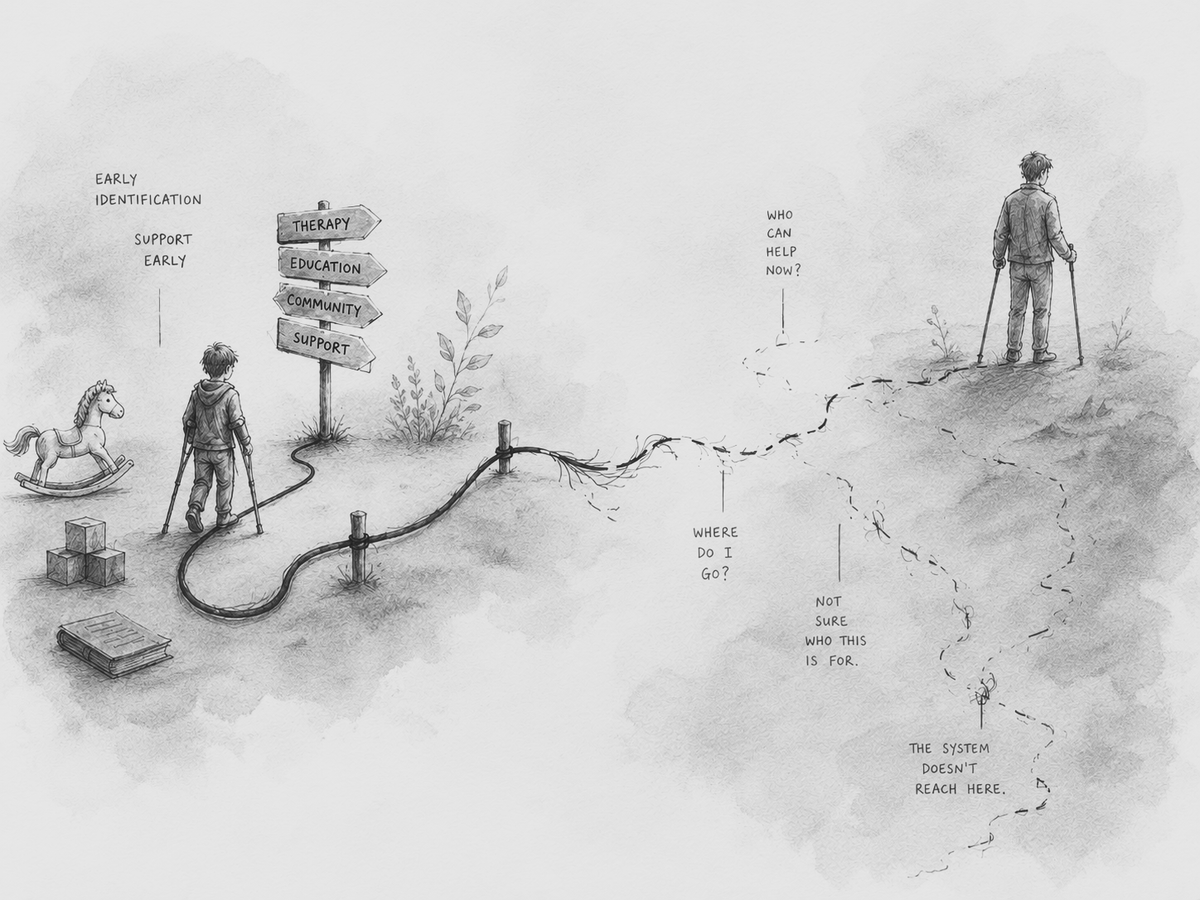
NDEAM offers an important moment of reflection, but inclusion cannot be limited to October. It must be reflected in the choices made throughout the year, in how spaces are built, how communication happens, and how opportunities are offered and shared. Progress is not measured in awareness campaigns or temporary programs. It is shaped through everyday practices that gradually make access and belonging a natural part of how communities function and grow.
Create a stronger transition and connection without being preachy, use my text: When inclusion is part of everyday practice rather than a once-a-year focus, the benefits reach everyone. People with disabilities are better able to participate fully, and the environments they engage with become more responsive and adaptable.
Meaningful inclusion takes shape in the ongoing choices made in classrooms, workplaces, and communities that approach belonging as a lived value rather than only an ideal. Its strength is not measured in declarations or events but in the quiet consistency of choices that make participation possible. It is evident in how spaces are designed, how opportunities are structured, and how people are welcomed as full participants in community life.
True inclusion becomes real when belonging is expected, not earned—when equity is built into systems and decisions from the start. It continues wherever people work together to create environments where everyone can contribute and lead. True inclusion begins when awareness becomes habit, when accessibility is built into every design, and when belonging is no longer an aspiration but a daily practice.


Join the conversation. Your thoughts and experiences are welcome.