

There are moments when barriers are easy to recognize. A building may have a step at its entrance without a ramp. A service may not be offered at all. A doorway may exist but cannot be used by everyone. These situations are visible and more straightforward to address.
More often, however, the challenge is less visible. Everything appears to be in place. The entrance is there. The system is open. The information is available. Yet once engagement begins, something shifts. Progress becomes uneven. Tasks take more effort than expected. What should feel manageable begins to feel uncertain.
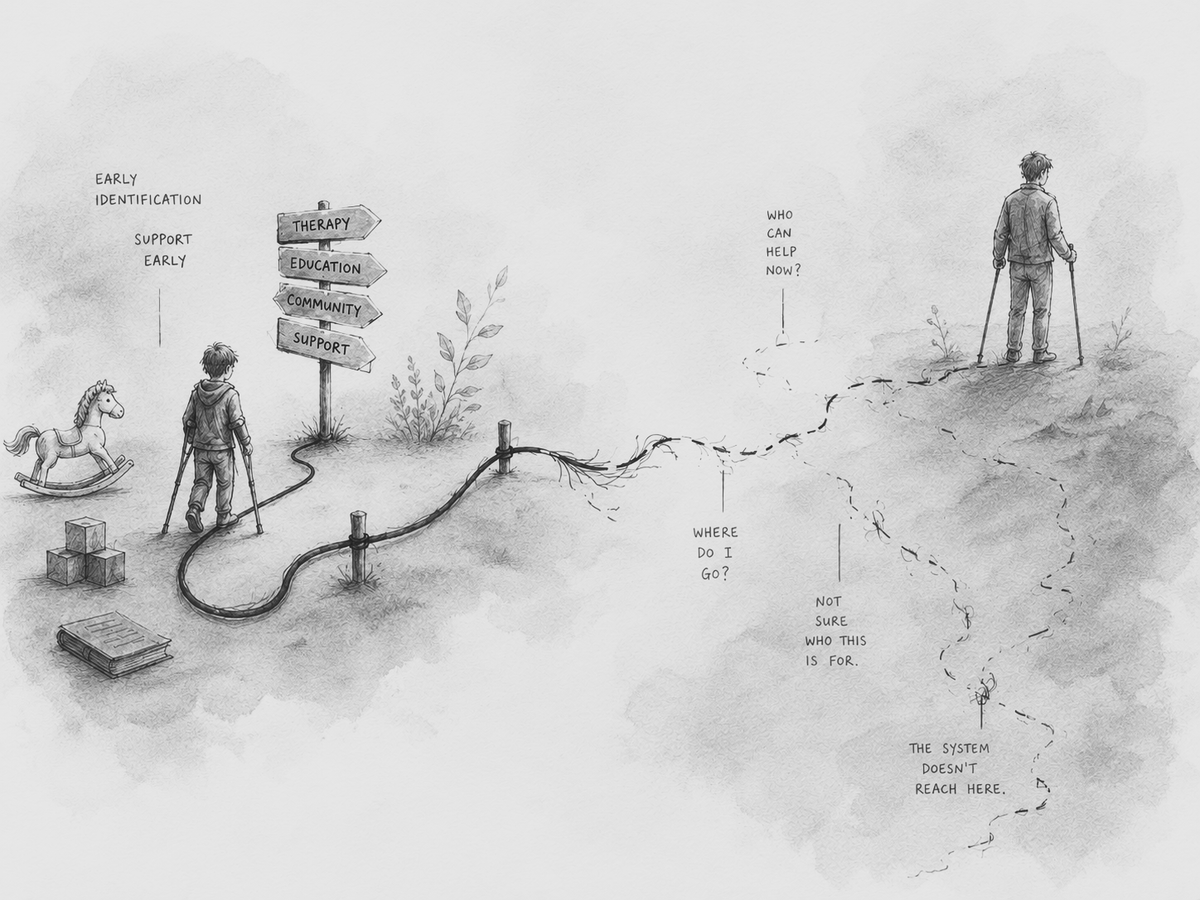
Accessible does not always mean usable. This gap determines whether people can truly participate. This distinction shapes everyday experience. It influences whether people can take part with confidence or whether interaction feels more difficult than it needs to be. In the United States, more than one in four adults lives with a disability (Centers for Disease Control and Prevention [CDC], 2023). This reflects a broad and diverse group of people navigating systems that do not always support ease of use.
The conversation, then, is not only about access. It is about what happens once someone arrives, and whether they are able to participate fully.
From Access to Use
This difference becomes clearer when looking more closely at how access functions in practice.
Accessibility is often understood as a matter of entry. It focuses on what enables someone to reach a place, open a document, or begin a process. Physical adjustments, alternative formats, and assistive tools are essential because they make participation possible.
At the same time, access is only the beginning. It does not guarantee that a person can move through a system with ease. A service may be available, but still feel difficult to use. A process may exist, but require more effort than it should. This is where the difference between accessibility and usability becomes more apparent.
Usability, in this context, refers to how easily a system can be understood and navigated. It shapes whether a person can move through a process and achieve what they need to without unnecessary effort.
Participation offers a more complete understanding of accessibility. It reflects whether usability is present in practice. It considers whether a person can complete tasks, follow what is being asked, and move through an experience without unnecessary difficulty.
Across many settings, there remains a gap between entry and experience. People can arrive, but still encounter friction once they are there. These moments may seem small, but they shape how systems are used and whether people choose to engage with them again.
Where Use Breaks Down
This gap becomes most visible in everyday interactions. The difference between access and usability is often found in routine experiences. It is consistent.
Physical environments can meet technical standards and still feel difficult to navigate. A ramp may be present but challenging to use because of its gradient or placement. An accessible entrance may exist but sit apart from the main flow of movement. These details influence how comfortably someone moves through a space.
Information can be available without being easy to understand. Long sentences, technical language, and dense layouts can make important details harder to follow. This affects many people. In the United States, a large share of adults have basic or below basic literacy skills, which shapes how information is interpreted and used (National Center for Education Statistics [NCES], 2023). When information feels difficult to follow, people often spend more time working through it or step away from it altogether.
The same pattern appears in service interactions. Many services depend on direct engagement with staff, and the quality of those exchanges matters. When staff are unsure how to respond to different needs, communication can feel less direct. Processes may take longer or require additional explanation. What could have been straightforward becomes more complex.
Digital systems extend access, yet usability is not always consistent. Federal standards in the United States require digital services to be accessible, including compatibility with assistive technologies such as screen readers and keyboard navigation (U.S. General Services Administration, 2025). International guidelines further define accessibility through principles such as content being perceivable, operable, understandable, and robust (World Wide Web Consortium [W3C], 2024). These standards establish a baseline for access.
Yet meeting these requirements does not ensure that systems are easy to use. Navigation may be layered, instructions unclear, and steps difficult to follow. A process that should take minutes becomes frustrating or incomplete. Barriers within digital systems continue to affect how people engage, particularly where usability has not been fully considered in design.
Across each of these examples, access is present. The difficulty lies in what follows.
Participation in Practice
When this pattern repeats, its effects extend beyond individual moments.
Participation shapes how people manage everyday activities. It influences access to healthcare, education, public services, and community connections. When participation is more difficult, the effects can build over time.
People with disabilities in the United States continue to experience differences in health outcomes and access to services, often linked to barriers that extend beyond entry and into usability (CDC, 2023). These differences reflect how systems function in practice.
The scale of this is significant. With one in four adults in the United States living with a disability, participation is a shared concern. When systems are easier to use, more people can engage. When they are not, engagement may decrease.
There are also implications for how services operate. When processes are difficult to navigate, people may delay using them or avoid them altogether. This can lead to increased demand at later stages, when needs may be more complex.
Beyond systems and processes, there is a personal dimension. The ability to complete tasks independently, to understand information, and to engage without added effort contributes to confidence. It shapes how people experience belonging within everyday environments.
Designing for Participation
Addressing this requires a shift in how accessibility is understood in practice. Strengthening participation begins with recognizing that accessibility continues beyond the point of entry. It is shaped by how systems are used from beginning to end.
Involving people with lived experience in design provides valuable insight. It helps identify where processes feel unclear and where adjustments can improve usability. These perspectives bring attention to details that may otherwise be overlooked.
Consistency in service delivery also supports participation. When staff feel confident in responding to different needs, interactions become clearer and more effective. This reduces uncertainty and supports smoother engagement.
Measuring how systems are used offers a more complete picture of accessibility. It is important to understand whether people can complete tasks, follow information, and move through processes independently. These outcomes reflect usability in practice.
Flexibility, in this context, means designing systems that can adjust to different ways people engage. It allows for variation in how information is presented, how tasks are completed, and how support is provided. It recognizes that people do not all move, read, think, or respond in the same way. When systems allow for these differences without requiring individuals to adapt at every step, participation becomes more achievable.
The gap between access and experience remains consistent across systems. Accessible does not always mean usable. The difference is often found in how systems function in practice rather than how they are designed to operate. use U.S.
In the U.S., disability affects a significant portion of the population, making usability and meaningful participation critical priorities. As a result, the focus extends beyond mere access to the quality and inclusivity of the experience itself.
Participation is what makes access truly meaningful. It allows people to move through systems with ease, to understand what is required, and to achieve what they need to.
The aim is not only to make access possible. It is to ensure that, once there, participation is not a challenge, but a given. What follows access continues to shape who is able to take part.
References
- Centers for Disease Control and Prevention. (2023). Disability impacts all of us. https://www.cdc.gov/ncbddd/disabilityandhealth/infographic-disability-impacts-all.html
- National Center for Education Statistics. (2023). Adult literacy in the United States. https://nces.ed.gov
- U.S. General Services Administration. (2025). Section 508 of the Rehabilitation Act. https://www.section508.gov/
- World Wide Web Consortium. (2024). Web content accessibility guidelines (WCAG) 2.2. https://www.w3.org/TR/WCAG22/


Join the conversation. Your thoughts and experiences are welcome.