I remember the morning of September 11th. The sky was clear, its blue suggesting an ordinary day, its calm offering the illusion of safety—even as the world was about to break.
I was getting ready for another workday when the news broke, and within minutes, everything felt unsteady. It wasn’t only personal. Everywhere, the same weight pressed down—a nation grieving, a nation in shock.
In the days that followed, nothing felt natural, as though everything familiar had been slightly rearranged. Sometimes the ground shakes because of headlines, sometimes in the quiet of your own life. The world shifts in public ways and in private ones. Either way, the result is the same: the ground beneath you no longer feels certain, and even ordinary things—commuting to work, calling a friend, making dinner—require effort because they exist in the shadow of something larger.
Aftermath
Out of the confusion, shock, and sorrow, light emerged in unexpected ways. Strangers spoke in grocery lines. Flags waved from windows and overpasses, not from politics, but solidarity. At the fire station near me, someone left flowers, and others joined without being asked. None of it erased the grief, but it mattered. It was proof that connection could exist inside loss—that even in the darkest hours, light refused to disappear completely.
That experience taught me that noticing matters. The dark does not vanish in a single moment; light presses through in pieces. It is not usually the darkness that changes, but the way light finds its way into it. Most of the time it doesn’t come loudly, but in moments that invite you to slow down. It tends to arrive quietly, in ways that ask you to lean in and notice.
A neighbor reaching out; a meal shared as comfort more than nourishment; a laugh rising through sorrow, when laughter itself seems impossible. Even here, the light finds us.
These moments do not repair what is broken, but they steady the day enough to keep moving forward. Some days arrive heavier than others, pressing down in ways that cannot be ignored. Darkness is stubborn, but never permanent. Light enters slowly, quietly, yet with a presence that cannot be denied. The dark takes its time, but it cannot last. Light returns, not only breaking the dark, but reminding that hope remains.
Life is a rough draft—revised, erased, and rewritten amid the marks others leave behind. It is not a final draft but a living text, shaped each day by the course of experience.
My name may be on the page, but the writing has never been mine alone. My parents set the tone for the first chapters. My brothers challenged and rewrote sections. Friends and community altered the story’s direction. None of this story would exist without their edits.
The word trailblazer has followed me since childhood. At first, it meant being handed a blank page and daring to write what no one had written before. Later, it meant refusing edits that tried to reduce me to a diagnosis or a limit. Over time, the meaning shifted. Today, the word feels less like recognition and more like a reminder.
A draft must be started, expanded, and shaped. It must also be torn apart and pieced back together. Along the way, others hand back the pen—pushing chapters forward and cutting what no longer belongs.
People sometimes ask why I do not write more about the darker chapters. The answer is not that they were absent. It is that pain on its own is never the whole story. A page filled only with suffering cannot carry a reader forward. Hardship gains meaning when it reshapes perspective, teaches, or leaves behind a lesson.
Draft One: My Parents and My Brothers
I grew up as the only daughter and the eldest sibling, with two younger brothers. Our parents established a home grounded in structure, empathy, and unwavering support. Just as importantly, they fostered belonging—where labels had no place and every individual was valued for who they were.
My brothers shaped my experiences as much as our parents. They did so through laughter, arguments, and flashes of unexpected wisdom. Whether we were inventing games, teasing each other, or fighting and getting past it, those moments built a bond that continues to shape how I see relationships, empathy, and belonging.
The middle child became the traveler. Even as a boy, he carried himself with a rare mix of insight and drive. He noticed patterns I missed, pointed out blind spots, and refused to be rushed. His observations, whether sharp or subtle, often unsettled more than they solved.
Yet even when I resisted, they challenged me to reconsider, to step back, and to see through a lens I might have overlooked. That discerning perspective carried him across the world. His choices remain deliberate. His eye is meticulous. His confidence needs no explanation.
The youngest became the entrepreneur. His influence was clear long before any business ventures. He has always carried a vitality that shifts the energy of a room without effort. One winter evening, I slipped on the ice and landed flat in a snowbank. Before I could pull myself up, he grinned and said, “Only you could turn getting in a car into a winter sport.”
With that line, he turned a fall into a story that resurfaced in laughter again and again. That moment captures who he is. He turns clumsiness into wit, frustration into levity, and failure into a reminder that a slip is just part of the story.
Together, my brothers broadened more than my perspective. The traveler’s steadiness and eye for detail sharpened my awareness and shaped the way I approach choices. The entrepreneur’s energy and imagination revealed the power of spontaneity and bold possibility.
I remember one afternoon at the kitchen table, struggling with a school report that refused to come together. The traveler leaned over my messy draft and, as if reading a map, pointed out what I had missed. Across from him, the entrepreneur couldn’t stand the tension. He cracked jokes, tossed out wild ideas, and had me laughing just when I needed it most. One reminded me to look closer; the other reminded me not to take it all so seriously. Together, they fueled my drive, built my confidence, and pushed me to follow through.
Later Drafts: Adult Lessons
As adults, their influence has taken new forms.
The traveler once brought me to Mexico, a place I had never been. What began as a vacation widened my sense of what is possible. He did more than take me somewhere new—he made sure I was part of it at every step. The true gift wasn’t just the places themselves, but the way he opened the experience.
The entrepreneur acts with the same intention. He brings me into the process, sharing the vision, the risk, and the reward. He imagines boldly, takes risks others avoid, and always makes space for me to share in those leaps. Where most see obstacles, he sees opportunity. His confidence makes me see it too. From him, I’ve learned that laughter can ease difficulty—and that risk, when driven by purpose, can lead to unexpected joy.
Later Drafts: Community
Over time, the story expanded beyond the walls of family. Friends, colleagues, and neighbors shifted tone, turned chapters, and filled margins I hadn’t noticed were empty.
A family friend once told me, “Maybe you were meant to be a trailblazer. Maybe you are writing a story that makes it easier for others to tell their own.” I didn’t understand then, but I do now. Trailblazing isn’t only about forging ahead—it’s also about what is left behind: experiences, decisions, and lessons that others may carry forward. That understanding grew not from me alone, but through the voices of those who questioned, encouraged, and urged me to keep writing.
Some chapters aren’t ready to be written right away. Some edits only make sense with time. The wrong turns, the missed chances, the trying and failing—they weren’t just setbacks. They became part of the rewrite. Struggle began to matter when it brought insight, revealed purpose, or left something behind that could last.
What Stays on the Page
The story has never been mine alone to write. My parents, my brothers, my grandparents, aunts, uncles, friends, and community have all shaped its pages. They left their marks —guiding, challenging, and expanding the narrative. If the word trailblazer belongs anywhere, it belongs in the acknowledgments—beside those who steadied the pen and helped me continue writing.
The traveler, with his intentionality, perceptiveness, and sense of adventure, and the entrepreneur, with his boldness, creativity, and charisma, continue to shape my story. Their paths remind me that every draft can take a different form. One brings depth through deliberateness, observation, and steady purpose. The other brings momentum through daring ideas and the instinct to act. Both are necessary.
This story isn’t finished. It is a draft shaped by memory, written through present experience, and still being revised by the influence of others—some whose impact I’m just beginning to grasp. The traveler steadies the pace, sharpens the focus, and invites me to look more closely. The entrepreneur disrupts the rhythm with possibility, laughter, and motion. Together, they show me there is more than one way to move forward.
Some stories don’t end—they evolve.
Life is not a finished work—it is marked by the influence of many. Patience, perspective, and attention reveal what might otherwise go unseen, while energy, daring, and humor turn obstacles into openings. A life is formed not by one direction alone but by the meeting of forces—one slowing the pace to look closer, another urging forward into possibility.
Trailblazing is not about moving forward in isolation, but about honoring the marks left upon us and leaving space for others to shape what follows. Each draft carries both fracture and discovery, both erasures and beginnings. Its strength lies not in completion but in how it keeps being rewritten.
Which influences will continue to shape the next drafts? What voices will leave their mark long after the page has turned?
Some stories don’t end—they widen the path for those still to come.
Author’s Note
Authors Note: A heartfelt thank you to my brothers—the traveler and the entrepreneur. Your influence has enriched this story in countless ways. Your presence lives in every draft, reminding me how much more is possible with your support—steady, present, and all around me. KAW
The paper on the exam table crackled sharply beneath me—too loud in a room where silence felt safest. I tried my best to stay completely still. My legs extended in front of me—straight and stiff, just as they always were. They did not dangle or swing. They never had.
The doctor stood nearby in his white coat. At first, he did not speak. He read the chart in silence, then began: tone, range of motion, surgical lengthening, long-term function. His voice was gentle, but final. He said the surgery would help. He said it might make walking easier. He said I was a good candidate. I nodded, because that was what I had learned to do. I stayed still. I cooperated. I did not yet know how to interrupt a conversation like that.
They were preparing for a bilateral hamstring release, a surgery that would lengthen the tight muscles behind my knees. I did not understand that then. I only knew I moved the way my body allowed. I didn’t know there was a problem to fix.
What followed was explained in grown-up language: tendons loosened, motion increased, balance improved, future complications prevented. At nine years old, I only felt their weight. Recovery would mean full-leg casts, swelling, immobility, and complete dependence on others. Above all, it would take time—more than a child could measure.
Even then, I could tell my parents were asking thoughtful, deliberate questions. Would the surgery improve my range of motion as I grew? Could it prevent contractures, the tightening of muscles and joints that restrict movement? Could it reduce the need for more invasive procedures later? Could it protect my mobility and, with it, my future independence?
Looking back, I understand the weight of what they carried. My parents were making decisions with lifelong implications. The right decision was made, and it shaped not only how I walked, but the life I was able to live.
When the appointment ended, the fear I had been holding back surfaced in full force. The sobs began in my chest before any sound escaped. By the time I reached the car, I was shaking, unable to stop. The seatbelt pressed against me, making it harder to breathe. My eyes blurred with tears until I could no longer see clearly. I did not have the words to say I was scared. I only knew I wanted everything to stop.
Time did not stop. The day of the surgery arrived, and what was once a conversation in the exam room became real beneath the sterile lights of the operating room. In the hours that followed, both legs were encased in plaster, rigid and white from hip to ankle. The casts added heaviness to immobility. Movement was no longer mine to manage. I needed help, and my parents responded with constant, practical care. They met each challenge as it came, inventing solutions for problems I had never faced before.
My childhood home had two floors, and my bedroom was upstairs. With both of my legs in plaster, getting down to the first floor required ingenuity. Sometimes my parents carried me, awkwardly balancing weight and steps. Other times I scooted down one stair at a time, slow and clumsy but on my own terms. Most often, they spread a sheet across the staircase, sat me at the top, and pulled me carefully downward while someone waited below to steady me. None of these methods were graceful, but each one worked, and more than once they made us laugh.
In those improvised solutions, I began to understand adaptation. I learned that problem-solving did not have to be neat or elegant. It could be practical, makeshift, even funny. What mattered was trying, adjusting, and finding a way through. Grit, in those moments, was not toughness or defiance. It was the willingness to keep testing what might work, to embrace imperfect fixes, and to keep moving forward even when nothing felt simple.
Eventually the casts came off, and the scars beneath were neat, pale lines. The surgeons were satisfied. My walking pattern changed. My knees stayed straighter, my steps were more controlled. As my body adjusted, my awareness deepened.
Getting through something hard did not always feel like success. Resilience was not toughness. It was simply continuing. My parents modeled it in steady, ordinary ways. They made things manageable. They offered tools to adapt. That lesson stayed, and lately the lessons have returned with new weight.
Now, I often find myself sitting beside others who stand at the edge of their own before and after. I recognize the moment, not because it is new, but because I remember it. I know the stillness in the exam room, the clenched grip on the chair, the shallow breaths. I know how composure holds, just barely, until the car door closes and tears finally come. These moments are not foreign to me. They are lived and remembered. So, I sit with them. I listen. I remind them they do not have to carry everything alone. I cannot change what lies ahead, but I can support them as they face it.
There is pain in the after, and there is grit, though not the kind most people notice. It is not polished resilience. In this context, resilience is practical persistence, doing small things like getting dressed when your body protests or opening the door when you would rather turn away. It is quiet steadiness, showing up even when strength is absent or when movement is awkward and imperfect.
It is adaptation, finding ways, however clumsy or makeshift, to keep moving through what feels impossible. It is sitting upright when lying down would bring relief. It is showing up, not out of strength, but because the next step waits. That work, steady and unremarkable, lays a path through days that feel impossible. This is grit: not toughness or defiance but the willingness to adapt and to move forward when nothing is simple.
For those still in the before, readiness is not required. For those in the after, strength is not the measure. For those who provide care, the task is not to fix but to adapt, to notice the smallest shifts, to honor an uneven pace.
Recovery and change are not puzzles to be solved. They are ongoing processes that must be met, moment by moment. Sometimes adaptation means stepping in. Other times, it means stepping back.
I know this because it was once mine. I was the child on the exam table, the one sobbing in the car, the one learning how to walk again. The scars faded but never disappeared. This was my before and after. Everyone has one. Sometimes it arrives as a diagnosis. Sometimes as a phone call that splits time in two. There is no perfect way to live in that space, no map to follow, only the next step. Moving forward is about adapting, again and again. It is about learning to walk in a new way.
The first steps after the casts came off were uneven and strange. My legs felt different, straighter, heavier, untested. Every small shift in balance felt uncertain. Nothing about it was smooth, but it was movement, and that was enough.
My parents taught me how to face uncertainty and navigate the unknown. They carried me when I could not move, steadied me when I faltered, and pulled me down staircases on a sheet when no better option existed. From them, I learned that the way forward lies not in certainty, but in adaptation—returning to try again, refining, and pressing on, even when the path feels strange, uncertain, and altered.
Now, when I sit with someone at the edge of their own before and after, I remember. I remember the crackle of paper under me, the tears I could not stop in the car, the plaster that kept me still. Because I remember, I do not turn away. I stay close. I listen. I walk beside them, pushing them toward the adaptation I know is possible. Even in the hardest shifts, a way forward always exists.
What moves a person forward is the continual choice to adjust, again and again, until motion returns. Forward is not certainty. It lives in the choice to move, even when the steps are uneven.
Vacations are supposed to create distance. They offer space from work, from routines, and from the endless to-do lists that seem to govern the hours. Vacations suggest that rest is possible, that the body and mind can recover when placed in new surroundings.
For many people, this promise holds true. For others, particularly people with disabilities, vacations cannot be separated so easily from the barriers that follow them. Those barriers fall under a name that is not always spoken aloud: ableism.
Ableism is the set of assumptions and structures that treat people with disabilities as less capable, less independent, or simply not considered in the plan. It is not always obvious or confrontational.
More often it settles into the ordinary, showing up in the layout of a building or in a casual remark never intended to harm. On vacation, when rest is supposed to be certain, the ‘isms’ can shift that promise into uncertainty for people with disabilities.
When Barriers Appear
Barriers are first noticed in physical spaces. A historic inn may promise charm, but if the only entrance is a staircase, that charm quickly narrows. For the guest who cannot enter, the missing ramp is more than an architectural detail. It is a quiet reminder of who was expected to arrive and who was not. Behind the design is an assumption: that every guest will enter by foot.
Restaurants reflect the same patterns. Chairs pressed tightly together leave little room to move. Bathrooms are designed with doorways that limit or restrict easy entry. Menus are offered only in small print. Many individuals move with ease, but some must navigate slowly, considering each movement. What is simple for one may be an obstacle for someone else.
Other spaces hold the same barriers. Theaters may advertise “accessible seating,” yet those seats are often placed apart from the center of experience, separated from family and friends.
Parks often have paths that stop short of the playground. The swings and climbing structures invite children to play, but few are designed for children with disabilities to join in fully.
Pools frequently offer ladders but no lifts, making entry possible for some and impossible for others. Beaches labeled “accessible” might provide a ramp to the sand or a narrow mat rolled across a small strip of shore. They rarely offer equal access to the water, or the freedom to decide where to settle and spend the day.
Accessible leisure, for both children and adults, should not mean being given a section off to the side. True access would mean being part of the same space, with the same choices, without separation. At present, those spaces remain rare.
Language reveals the same assumptions. “Do you need someone with you?” may sound like care, yet it assumes dependence. “You are so inspiring” may feel generous to the speaker, but it frames ordinary activity as extraordinary. Words like these rarely stand alone. Over time, they gather, forming a quiet echo that reminds people with disabilities their presence is often viewed as unexpected.
What might begin as a simple walk along the boardwalk or a peaceful day by the water can slowly shift, less an act of leisure and more a quiet resistance to assumption.
What Access Really Requires
Vacations are sold as effortless. For people with disabilities, effort begins long before arrival. It means asking whether the “accessible room” actually includes the promised roll-in shower. That effort does not end with a booking. It lingers in the quiet awareness that what is promised may not match what is waiting.
At the heart of these moments lies a deeper assumption: that access is the burden of the individual, not the responsibility of the spaces that claim to be welcoming but too often fall short. When those details fail, the work of adjusting rarely falls to the hotel or the tour operator. It falls to the individual. They are the ones who must adapt, shift plans, or quietly withdraw from the experience.
While others move freely through an environment, people with disabilites are often left measuring what is possible and what is not. Meaningful access requires more than a pleasant setting. It depends on spaces that do not layer each moment with hidden calculations. It depends on thoughtful choices that acknowledge the many ways people move through space. It depends on conversations that begin with listening rather than assumption.
Access begins to fade when participation is constantly shaped by uncertainty and constraint.
Imagining Something Different
What would it feel like if the ‘isms’ did not travel along on vacation? The answer would not be extraordinary. It would be the quiet sense of belonging that needs no explanation.
Ease would not have to be earned. Doorways would open without resistance. Spaces would offer comfort unasked. Menus would arrive in forms that can be read in different ways. Conversations would unfold without presuming limits.
Such a vacation would not single out people with disabilities or make ordinary moments feel set apart. Instead, it would create a space where access is a given, not a special accommodation, allowing everyone to belong without the burden of exception.
The idea of a vacation free from the ‘isms’ is not just a sentiment. It is possibility. The ‘isms’ named—racism, sexism, classism, ableism—do not step aside on their own. They persist not only in leisure but also in work, in schools, and in communities.
They start to shift when exclusion is no longer seen as an acceptable part of the design.
A vacation that welcomes everyone is within reach. The work is to shape it. When that happens, access will not carry conditions. It will carry something else entirely: the quiet assurance that presence is expected, that participation is ordinary, and that belonging does not have to be earned.
The Ordinary Made Possible
An ideal vacation would not be defined by the kind of space it offers. It would take shape in places where restaurants welcome without hidden barriers, where theaters gather families without creating division. Pools would feel like true invitations, not guarded thresholds. Beaches would offer broad, unbroken access, no longer confined to a single narrow boardwalk or path. Parks and playgrounds would call every child into play, with no one left out.
A vacation free from the ‘isms’ would ease more than physical barriers. It would offer relief from the subtle intrusions of assumption and the casual remarks that quietly turn ability into limitation. It would allow children, with and without disabilities, to grow with a sense of their belonging. It would give adults, in every circumstance, the space to be without the ongoing need to explain. It would open room for presence without separation, and for moments to unfold free of its trace.
A vacation from the ‘isms’ would be both physical and psychological: ease that does not need to be earned, belonging that does not have to be explained, and access free of conditions. It would become what the concept of vacations should have always promised—the chance to arrive, knowing the space was already prepared.
Access is not an extra feature or a special request. It is what allows a vacation to fulfill its purpose: to be welcoming, to offer ease, and to open fully to all. Without it, participation itself becomes conditional, extended to some while quietly denied to others.
The ‘isms’ do not fade simply because the setting changes. They remain present—in the ways spaces are designed, in the assumptions that shape decisions, and in the quiet patterns that often go unquestioned. Yet, they are not fixed. They begin to shift when inclusion is treated as essential, when access is considered from the start, and when belonging is reflected in the design of ordinary spaces.
A vacation without the ‘isms’ offers a glimpse of what becomes possible when access is built into the structure itself—not as an exception, but as an expectation. It points toward something that should never have been rare: a space where presence feels unquestioned, where participation belongs to everyone, and where inclusion is simply the way things are.
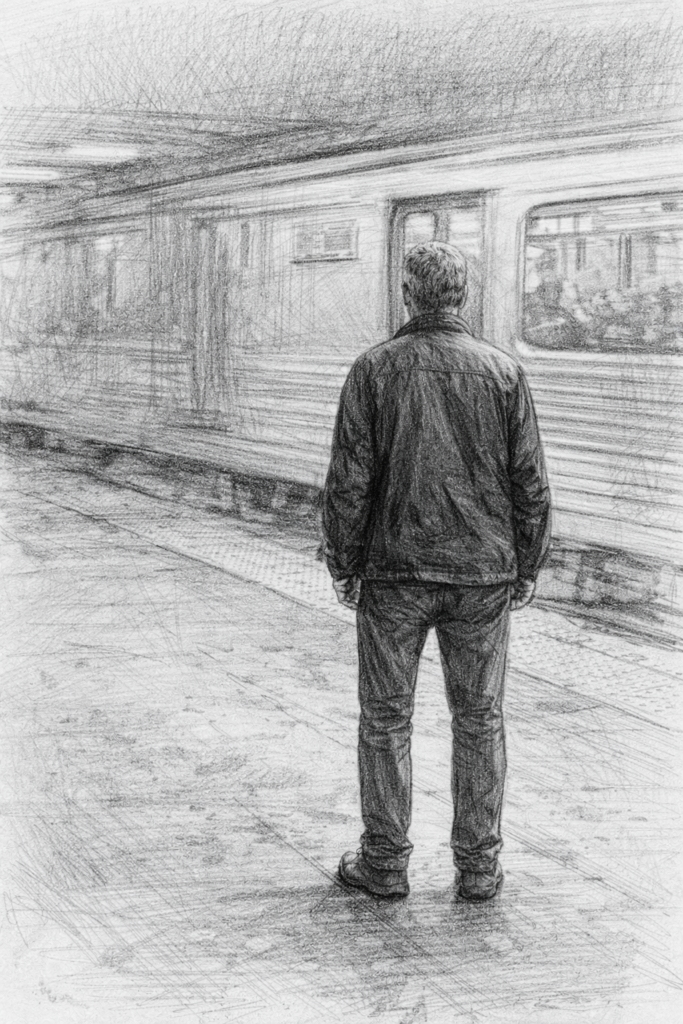
A crosswalk chirps as a bus hisses to a stop. Somewhere, a sensor fails to trigger, and the door remains closed. A wheelchair user turns away while the light changes. A person with walking poles begins crossing but does not make it across in time. The signal shifts before their pace can match it.
This is not a crisis. It is a moment few people notice, yet for someone unable to proceed, it defines the shape of the space.
This moment does not reveal failure in the person. It reveals absence in the structure.
What Presence Requires
Cities operate on momentum. Doors can open before someone is ready. Signs can flicker faster than some eyes can follow. When pace becomes a design assumption, presence turns conditional.
Access is often seen as an added feature, introduced as a thoughtful or progressive improvement. This view treats inclusion as a choice rather than a necessity. In reality, access is not a bonus or an extra. It is a measure of whether a structure is designed to reflect and include the full range of people who use it.
Not all people walk. Not all people see the same shapes or hear the same tones. Access should not wait until someone asks. It should be expected from the start.
Consider a train station where announcements are both spoken and written. Consider a store where movement is possible without asking for rearrangement. These are not signs of extra effort. They are the outcome of recognizing people who are already present.
Disability does not interrupt the space. It belongs within it.
Forgetting as Barrier
Exclusion does not always stem from deliberate intent. It often arises quietly, through what has not been considered or included.
Many barriers are not marked with closed doors or refusal. They exist in counters placed too high, instructions delivered only in print, or steps installed without an alternative. These choices may appear minor on their own, but together they convey a quiet but pointed message: the full diversity of those who might engage with this space was not accounted for in its design.
When access is at the main entrance rather than the side, when words appear as they are spoken and when direction is felt through touch, the message changes. The structure no longer assumes one way of being present; it acknowledges many.
Accessibility can be as simple as slowing the pace or offering multiple ways to respond. These choices do not disrupt the space. They deepen it. Presence expands when people no longer have to fight to be included.
No One Moves Alone
Limits are often framed as obstacles to overcome or minimize. This view places the burden on the individual and overlooks the role of design in shaping experiences.
Everyone adapts. Everyone relies on others in different ways. Interdependence—the mutual exchange of support and care—is not a weakness but a natural part of how people exist and interact. Designing with care is not about erasing limits. It is about creating space where limits do not turn into exclusions.
Access should not be seen as a special provision, a technical fix, or simply a policy requirement. It is a recognition that people engage with spaces in varied ways, shaped by differences in body, mind, culture, and experience, and that this diversity should inform the way shared environments are designed and sustained. Design is not complete until it includes all of us.
What is often perceived as absence is, in many cases, the result of not being included in the planning process.. The person was there. The structure simply failed to notice. When the system blinks, the interruption does not reveal something broken. It reveals what has always required attention.
Recognition does more than restore access. It makes belonging visible. It says: You were never the problem. You were always here. Now the design sees you.
Inaccessibility is not a matter of someone failing to fit the space. It is about the space not being built to notice the people who were there. When design overlooks people, it is not their presence that is the issue—it is the structure’s failure to recognize it.
Access isn’t an upgrade or an exception. It is how we make clear that everyone belongs. When design begins with that truth, presence no longer has to be earned. It is simply assumed.
Some things hold on longer than they should. They take in pressure, adjust to strain, and stretch to contain what was never meant to be there. They keep holding, reshaping themselves beyond recognition—until they can’t anymore.
Then they break. The moment is quick. There is no warning, no escalation—just a sudden shift. No one sees it coming, but once it happens, there is no going back.
Something inside stops holding, and nothing rises to take its place.
Hemorrhaged
By Kerry Ann Wiley
Something inside tore open. No sound— just the collapse of something vital into silence.
A death without witness, messy, blood where love once lived.
The floor darkened, red spreading, unstoppable.
A bloody hand, trembling, pressed against the wound, trying to hold back what could never be held.
Something inside tore open.
Silent. Messy. Unseen.
Blood pooled where love once lived.
What Breaks, and What Stays Broken
“Hemorrhaged” speaks to the breaking point of strain carried too long.
The poem begins with pressure—something held beyond its natural capacity. Something stretched until it lost its shape. Something forced to contain what it was never designed to carry. Under unforgiving burden, the structure bends, remakes itself, and finally gives out.
When the break comes, the moment is sudden and irreversible. A vital center fails, and nothing steps in to hold what has collapsed.
The poem moves directly into that collapse. The wound is already open. Blood spreads across the floor. A hand presses against it, desperate to hold back what refuses to stop.
A death without witness, messy, blood where love once lived.
The images remain anchored in the body: a floor darkens, a stain spreads, a hand trembles against what has already escaped. These are not abstract gestures. They are physical truths that record the collapse in detail.
The blood keeps moving. The hand keeps pressing. The collapse has already taken place.
Trying to hold back what could never be held.
This is the shape of survival: clinging to what keeps bleeding out, trying to bind what will not stay, pressing against what cannot be contained, reshaping again and again until nothing recognizable remains.
The poem returns to its central line: “Something inside tore open.” The repetition reminds us the wound persists. The bleeding does not stop.
As the poem progresses, language itself begins to break down. Sentences lose their shape. Thought falls into shorter lines, no longer able to carry weight in the same way. Form mirrors rupture.
Where love once lived, blood spreads. The mark deepens. Pain stays. It stains. It does not let go.
The hand keeps pressing, but the wound does not close.
The Questions That Linger
The break remains. The bleeding persists. The hand still presses down. And what lingers are questions that refuse to fade:
What still bleeds, hidden where no one can see?
How long must someone carry what was never meant to be carried alone?
Some things hold on longer than they should, and when they break, the wound remains and the mark endures.
“Though my soul may set in darkness, it will rise in perfect light; I have loved the stars too fondly to be fearful of the night.” —Sarah Williams, The Old Astronomer to His Pupil (1868)
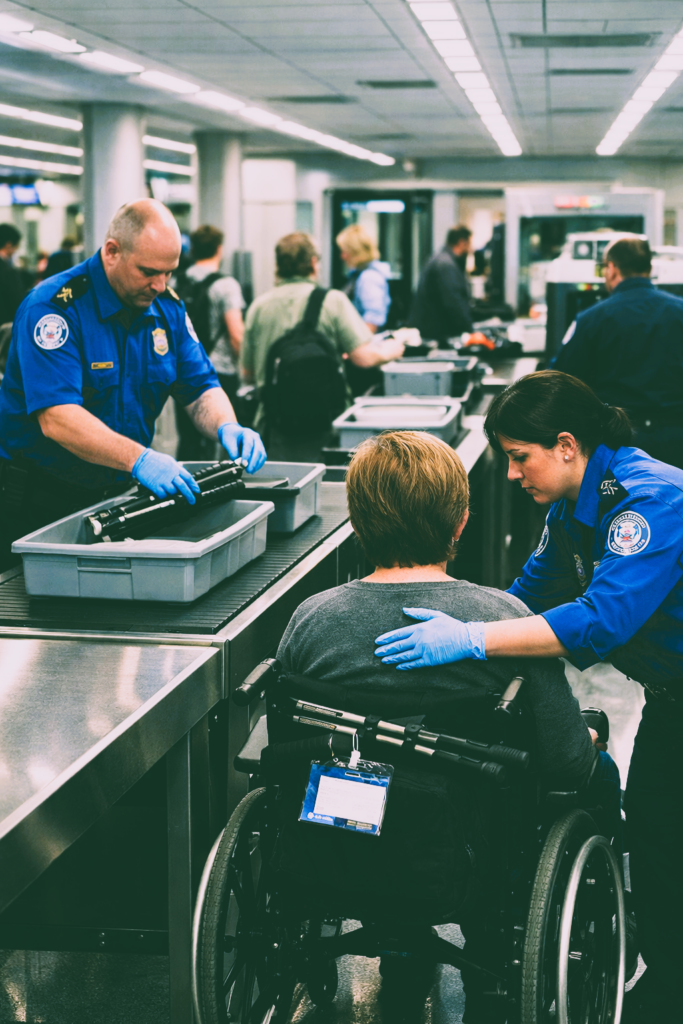
A terminal hums with its ordinary mix of noise. Announcements echo from overhead speakers. Suitcases rattle against the tile. Conversations overlap as people move toward gates. For someone seeking quiet, the space may feel overwhelming. For someone facing barriers, the space may feel closed.
Sarah Williams understood this tension. For her, darkness was not emptiness but the condition that made stars visible (Williams, 1868). What looks like absence holds its own kind of presence. Perspective reveals what has always been there. In her poem, night is not an interruption of the day but part of the natural order. Darkness does not erase light; it makes it possible to notice it. Stars are not marks on a void but proof that the sky is complete.
Barriers and Access
The terminal, like the night sky, contains layers: sound and silence, movement and pause. Neither cancels the other. Silence shapes the space until a boarding call cuts through; motion defines it until stillness interrupts.
Night is often described in terms of what it hides: uncertainty, losing direction, interruption.
Disability is too often described the same way—only in terms of what is missing. Both night and disability are framed as absence, when in truth they carry their own presence.
Williams saw night differently. For her, darkness was not failure but a setting in which something else could be revealed (Williams, 1868).
The real barrier in a terminal comes when access breaks down—when elevators stall, when boarding calls blur past too quickly, when signage leaves travelers guessing. These are not failures of individuals. They are failures of design. Exclusion happens when systems are built without access in mind. Remove those barriers, and what once seemed hidden is revealed as always present.
What Recognition Reveals
When Williams wrote of “perfect light,” she was not describing flawlessness. She was describing recognition—dignity acknowledged rather than denied (Williams, 1868).
Accessibility is that recognition. It appears in decisions that may seem small but prove decisive: gates that can be reached, signs that can be read, conversations paced so all can follow. It is present when routes through a space are clear, when information comes in more than one form, when systems adjust to include rather than exclude. It is present when institutions change because exclusion is no longer acceptable.
Think of a tactile floor strip that guides someone with low vision, captions on a live announcement, or a ramp placed where everyone actually enters—not hidden at a side door. These are not extras. They are signals that belonging is built in.
The challenge is not disability itself. The challenge is the structures and assumptions that restrict access.
Living with Limits
Disability is often spoken of in terms of limits, yet limits are part of every life. Everyone depends on others. Everyone adapts. Everyone changes.
Williams points toward this shared truth. She wrote of loving the stars too much to fear the night (Williams, 1868). Her words remind us that recognition, respect, and care do not erase limits but make them livable together.
No one lives without limits. No one lives outside of connection.
Seeing Differently
Williams did not deny hardship, nor did she romanticize exclusion. She grounded her vision in presence rather than absence.
The terminal hums with repeating announcements and the roll of suitcases. The wish for stillness remains, yet the space is already alive with motion. Sound and quiet exist together, just as night and stars share the same sky.
The darkness was never empty. Like the terminal’s layered noise and movement, it carries presence rather than absence. Sarah Williams recognized in the night not what was missing, but what could finally be seen (Williams, 1868). This vision, of light revealed rather than obscured, reshapes how we understand both space and disability.
The challenge is not darkness or limitation itself, but the systems that fail to account for them. When access is built in, and when design recognizes the full range of ways people move, communicate, and exist, what seemed hidden is revealed as always present.
Recognition changes everything. It does not erase difference; it makes belonging possible.
Curiosity can open doors, but it can also cross thresholds uninvited. It draws people together, closing the space between them. A question, a comment, or a glance that lands just right can bridge the gap between strangers and turn a silent moment into something shared. The right kind of question invites connection without demanding it; the right kind of glance says we are both here, in this moment, seeing the same thing.
Yet curiosity is never entirely passive. It reaches. It wants something: an answer, a reaction, a glimpse past what is freely offered. How it reaches, with care or without, can open a door or cross a line. That difference, often small and almost invisible, is what lingers after an encounter.
In the post office, it began with a woman’s question. The place was busy. People waited in a slow-moving line, packages tucked under their arms, shifting from one foot to the other. Clerks called out for the next customer, voices carrying over the low murmur of conversation.
I stood at a worn metal counter, filling out a shipping form. The edge of the metal was cool under my wrist. The print was small and dense, difficult to read without leaning in and narrowing my eyes. In my left hand, I held my walking poles. Their rubber tips shifted quietly against the tile floor each time I adjusted my stance. Behind me, a woman leaned in.
“How did you end up needing those?” she asked, nodding toward the poles. Her voice was light, nearly friendly.
I didn’t respond. I smiled just enough to be polite and turned back to the form. The silence that followed didn’t feel awkward. It felt chosen. I held that boundary.
Walking home later, I revisited the moment with the woman at the counter, looking for what had unsettled me. It wasn’t the question itself; it was the nudge behind it, seeking to satisfy a personal curiosity that didn’t belong. We were two people waiting to send packages. She could have commented about the line, the form, or simply remained silent. Instead, she asked a question I hadn’t invited or prepared to answer.
A week later, I agreed to meet a friend at the local park. While I waited, I leaned against the cold metal railing overlooking the pond. The water was calm. A man walking his dog stopped beside me and nodded toward the far bank. “See the ducks nesting over there?” he asked.
I hadn’t. He pointed to a cluster of branches. We stood quietly for a moment, both watching the ducks dip their heads and shake the water from their backs. Then he smiled, gave a slight wave, and moved on with his dog, leaving behind a brief exchange whose reach was nothing like the one in the post office.
The question in the post office reached beyond what was offered. The question by the pond stayed within the moment itself. Both closed the space between strangers, yet one felt like a step too far, while the other felt like a step within bounds—one that truly belonged.
The difference is slight, but it can alter the course of an encounter entirely. A word, a glance, a choice to ask or not ask can open the door to connection or close it before it begins.
What makes a question the right one to ask? Is it the timing, the intention behind the curiosity, or the sensitivity to the moment itself? Some questions invite connection because they stay within the bounds of what the moment can hold. Others ask too much, too soon, reaching beyond what was offered.
Curiosity is not neutral; it carries intent, weight, and consequence. It doesn’t just ask what—it asks why now, and why this person. Sometimes the moment can hold that attention; sometimes it can’t. The difference between connection and intrusion often lives in something small: a pause, a glance, a sense of how much space to leave untouched. The right question can offer presence; the wrong one can press too far. So perhaps the deeper question is not only what to ask, or when, but this: who is the question meant to serve—the one who asks, or the one who answers?
Pity wears comfort’s face. It speaks in gentle tones, its gaze saying, “I can’t imagine going through that.” Sometimes it smiles and adds, “You’re handling it so well.”
At first, that may feel like recognition. Soon, it shifts. Struggle draws the eye. A visible difference—such as how a body moves, how long it takes or how much space it occupies—catches attention. Even when understanding does not follow, the gaze lingers.
Pity notices but stays at a distance. It offers kindness from the outside. The gesture may look caring, yet beneath it sits quiet relief: that is someone else’s burden. It may pass for compassion, even if it often carries the unspoken thought: better them than me.
Outside the bookstore, I paused at the curb and adjusted my walking poles before stepping off the curb into the crosswalk. It was not difficult; it was simply something to manage, like shifting a backpack or tying a shoe. Still, I felt someone watching.
Across the street, a woman I vaguely recognized waved. As I reached her, she said, “You’re incredibly brave, you know, managing to get around like that.” Her voice was warm, but her words landed strangely. Walking had been re-framed as courage rather than part of my day. I smiled because it was easier than correcting her. She gave a single nod and continued walking, without waiting for a reply.
Later, at the bookstore café, I made my way to the table near the back, where my friends were already waiting. The street was visible through a side window. I reached the chair, leaned my poles against the wall, and was still settling in when Rae took the book I had purchased earlier and set it on the table for me. Everyone else had already found something to read. We flipped through pages in a loose rhythm, occasionally sliding a book across the table or tapping a finger against something worth seeing.
A woman at the next table glanced over at me. “It’s nice that your friends save you a seat,” she said. Her smile was polite, her tone light, but there was something familiar in the way she said it—something I’ve come to recognize. It sounded like praise for my friends, but there was a softness in it that reached me, too, as if the gesture mattered more because of who it was for. I nodded, as I usually do in moments like that, never quite sure how to respond without making it something it didn’t need to be.
Not long after, Rae looked over. “This chair’s not bad. The ones near the front make that horrible scraping sound when you move.” I laughed because I knew exactly what she meant. She asked if I had found the book I was looking for. We talked about our finds, then about a terrible film adaptation of a good book. It was easy, not because anything disappeared, but because nothing needed translating. She stayed in the moment, already beside me.
Everyday moments can quietly reveal imbalance. Some gestures, though offered with kindness, come edged with quiet expectations. The woman at the curb meant to encourage, but her words drew a line—one of us giving approval, the other receiving it for simply managing. In the café, it was the same. The woman spoke of the seat as something given to me, not as a place I naturally belonged.
In both instances, I was cast in the role of recipient, while others shaped the meaning of what was being offered and why. It can leave a person visible only through what sets them apart, not through the ways they are present and engaged within and beyond those differences. Pity often appears when someone does not know what to say or how to step across discomfort. For the one offering it, pity feels safe. For the one receiving it, it narrows how they are seen, and eventually, how they see themselves.
What matters more than pity, or even compassion, is presence without a spotlight. It is a kind of attention that does not define a person by what they carry, how they move, or how others imagine their experience. It says, I see what is here, not as different or apart, but as belonging. It offers recognition. With recognition comes the space to move freely, to speak, and to simply live.
Shadows linger in the room. Light creeps across the table. A clock ticks unseen. The moment should pass, but it doesn’t.
A question has been placed between two people, and in its arrival the light hardens. The warmth drains, and what remains is not movement or words, but the fine crack that shifts the whole surface, a fracture that sits where words no longer reach.
The Line That Will Not Mend
By Kerry Ann Wiley
An answer waits, known yet unspoken, before the question comes.
The words feel worn, edges dulled by too many crossings, like prayers muttered until voices fray, like truths traded for silence or safety, leaving cracks unnamed.
There is an answer, but the words are worn, once sharp enough to wound, now tempered, the break between then and now held open.
Some silences are deliberate, some truths hide not from fear, but because once revealed they would leave a rift that cannot be crossed again.
The poem opens in a room defined by shadows, creeping light, and the steady tick of an unseen clock. Time itself feels suspended in this space, caught between silence and speech. When the question arrives, it changes everything—the light hardens and the warmth drains away. In that moment, a fracture appears between two people, a crack where words can no longer bridge the distance.
“An answer waits, known but unspoken,” establishes a tension that exists before confrontation. This silence is not empty, it is charged, a fragile space that can protect or deepen the divide.
The image of worn words, edges dulled by “too many crossings,” reveals language stripped of its power by repetition and compromise. Words that once could wound are now softened, yet the fracture remains open and unresolved.
The poem’s closing lines expose silence as a deliberate act, not born of fear but necessity. Some truths are so divisive they create breaks that cannot be healed.
Silence acts as both shield and barrier. It holds the past in place but also traps those involved, cutting off any chance for healing or moving forward. The poem asks us to face the true cost of silence, not just the words left unspoken but the growing distance that eventually feels impossible to bridge.
This fracture is more than just a gap between people, it is a choice made to protect what remains, even if it means losing what once mattered most. Sometimes withholding the truth is not about fear but about knowing that some boundaries, once crossed, change everything forever.
The poem leaves a question that lingers beyond the last word: how does anyone move forward when the breaks run too deep to heal, and silence becomes the only language left to speak?
Together, the poem and its reflections reveal a harsh truth. Some breaks don’t heal because they mark where connection ended. These lines aren’t just cracks, they are walls built from fractured trust and silence too heavy to bear. What’s left isn’t peace but an emptiness that refuses to be filled.
It asks something brutal: how do you carry on when silence between you roars louder than any word?